Categories
Food & Restaurants

Grease Trap Pumping in Lynwood Shopping Center Multi-Tenant System Coordination

Greetings to every restaurant and commercial kitchen owner in our community. Correctly handling fats, oils, and grease is more than a chore; it is a crucial part of protecting your business health. Failing to handle this duty properly can create severe consequences.

This site is about Grease Cleaning Pros in Lynwood

Read more about Grease Cleaning Pros in Malibu

Go to website of Grease Cleaning Pros in Manhattan Beach

Neglecting your grease traps can expose you to costly fines and health department closures. It can also damage your reputation overnight. This is exactly where professional Grease Cleaning Pros In Lynwood becomes your trusted and essential partner.

Our top-rated service provides reliable and efficient grease trap cleaning. We use advanced methods like hydro jetting to keep your drainage and sewer systems running smoothly. Our goal is to protect your investment.

We provide a complete range of services. This includes routine trap maintenance, emergency plumbing repairs, and responsible used cooking oil recycling and disposal. Our team manages every aspect of grease control.

Our approachable, expert crew works with your schedule in mind. We complete thorough work while minimizing disruption to your operations. We also ensure you meet all local regulations for complete compliance and peace of mind.

Important Takeaways

  • Ignoring grease trap upkeep can lead to heavy fines and business closures.
  • Routine professional cleaning is an essential investment in your operation’s safety and efficiency.
  • Grease Cleaning Pros offers comprehensive solutions, from cleaning to emergency plumbing support.
  • Appointments are flexible and arranged to prevent interruptions to your kitchen’s routine.
  • A major benefit of using a professional service is staying compliant with Lynwood’s health and safety codes.
  • Proper oil recycling is part of a responsible, full-service approach.
  • Protecting your establishment’s reputation starts with reliable grease management.

Why Professional Grease Trap Cleaning Is Essential For Lynwood Kitchens

Operating a kitchen without a professional grease management plan invites preventable disasters. What looks like a small oversight can quickly grow into a serious crisis that threatens your whole operation.

Recognizing the true risks is the first step toward proactive and responsible management.

Stop Costly Emergencies And Health Department Closures

A clogged or overflowing trap immediately raises concern for health inspectors. It may result in an immediate shutdown order.

This halts your revenue and triggers a costly scramble for emergency plumbing repairs. Penalties for violations are often steep, ranging from $1,000 to $50,000.

Routine trap cleaning usually costs just a few hundred dollars. Compare that to the thousands needed for crisis repairs and lost business.

Grease Cleaning Pros in Lynwood

Stop Fines And Defend Your Business Reputation

Your establishment’s reputation is built on trust. One public health violation can destroy that trust overnight.

Word moves fast within a community. Customers might decide to eat elsewhere if they doubt your sanitation standards.

Professional grease trap cleaning gives you documented proof of compliance. This safeguards your reputation while helping your business remain open.

Create A Safe, Efficient, And Odor-Free Workspace

A neglected trap creates serious hazards inside your kitchen. Foul odors from hydrogen sulfide gas make the environment unpleasant.

Grease spills can leave floors dangerously slippery. This increases the risk of staff injuries and potential lawsuits.

Drain backups can also harm costly equipment. Your dishwashers, ice machines, and drain lines are all at risk.

Regular maintenance ensures a safer, more efficient system. It helps prevent slow drains and keeps your full plumbing network flowing properly.

Working with an expert service is an investment in the safety and smooth operation of your business. These professionals have the tools and experience to do the job correctly.

Grease Trap Vs. Grease Interceptor: Selecting The Right System For Your Lynwood Business

Two main devices handle kitchen grease, and knowing which one your establishment uses is crucial for compliance. The correct equipment helps protect your plumbing and prevent expensive problems with the public sewer system.

The right choice depends on daily output, menu offerings, and customer volume. Let’s break down the options to help you identify what you need.

Under-Sink Traps For Smaller Establishments

These compact units are typically found right under sinks. They usually have a capacity of 20 to 50 gallons.

This type is perfect for cafes, diners, and smaller restaurants. They effectively manage smaller amounts of fats, oils, and grease.

The trap works by slowing water flow. This gives FOG time to cool, solidify, and separate from the drainage water.

Regular maintenance is essential for these indoor systems. A qualified service keeps them from filling beyond their safe limit.

Large Interceptors For High-Volume Restaurants

For busier kitchens, a larger solution is required. The grease trap interceptor is a heavy-duty system installed underground outside the building.

These systems offer large capacities ranging from 500 to 5,000 gallons. This type is commonly needed for hotels, banquet halls, and steakhouses.

High-output operations create far more waste. This interceptor can manage the load created by several kitchen lines and dishwashing stations.

The size and placement of this unit make expert pumping absolutely necessary. Attempting to manage this system without professionals is not recommended.

Knowing Local Lynwood Rules And Requirements

Municipal codes specify which system must be installed. Health department rules also set cleaning frequency standards.

Being aware of these regulations safeguards your business. Non-compliance can result in significant penalties.

Here is a simple guide to help you understand the requirements:

  • Check your capacity: Match your grease trap size to your kitchen’s daily output.
  • Check local codes: Lynwood enforces specific rules regarding installation and maintenance.
  • Document everything: Keep records of all cleaning and service for inspections.
  • Talk to a professional: A qualified professional can assess your setup and keep you compliant.

Each device handles the same essential task. They catch FOG before it enters the public sewer line.

Knowing your equipment size and setup is the basis for an effective service schedule. That knowledge helps you avoid emergencies and remain in good standing.

When Should You Clean Your Grease Trap In Lynwood?

Finding the optimal cleaning frequency for your grease trap isn’t about guesswork. It’s about understanding your unique operation.

For most establishments, this necessary service is required every 30 to 90 days. However, your specific schedule depends on several key factors.

Let’s explore what determines how often you should schedule this critical maintenance.

Factors That Shape Your Cleaning Schedule: Volume, Menu, And Size

Your menu is a major player. Any kitchen with a fry-heavy menu will produce more fats and oils.

Customer traffic directly affects how quickly your trap fills up. A packed dining room means more dishwashing and drain use.

Your unit’s physical size is a major factor. A smaller grease trap fills much faster than a large interceptor.

Local regulations also establish the minimum standard. You must meet or exceed these rules to stay compliant.

For instance, a busy diner with a fry-heavy menu will probably need monthly service. By contrast, a small coffee shop might stretch quarterly cleanings.

The 25% Capacity Rule: Why Timing Is Critical

Municipal codes have a clear benchmark. They require pumping once fats and solids reach 25% of your trap’s capacity.

This isn’t an arbitrary number. Once a quarter full, the system stops working efficiently.

When that level is reached, grease and water can no longer separate effectively. This can immediately trigger issues like bad odors and sluggish drains.

Drain backups can start affecting your kitchen lines. Ignoring this rule risks a major plumbing emergency.

This is exactly why tracking trap levels between trap cleaning appointments matters so much. Do not wait until a crisis happens.

Creating A Proactive Maintenance Plan To Avoid Disasters

The smartest approach is proactive. Track every pumping visit and record the fill level of the grease trap.

This data helps you establish a reliable pattern. That allows you to schedule upcoming cleaning visits in advance.

Your plan should adapt as your business changes. Changes such as a new menu item or heavier traffic could mean you might need monthly attention.

Do not stretch service intervals simply to save a small amount of money. A sudden repair bill will cost far more than regular service.

Grease traps need consistent care. Smaller cafes might have more flexibility, but they still require a plan.

A regular schedule is your easiest path to compliance and a harmonious workspace. It prevents surprises and keeps everything flowing smoothly.

Our Proven Process: Why Grease Cleaning Pros In Lynwood Is Different

A dependable partner does more than simply complete a task. They follow a proven system designed for your success.

At Grease Cleaning Pros, our process is what makes us stand out. It blends thorough work, advanced technology, and real respect for your time.

Each visit follows a precise process. This helps make sure nothing is missed and your operation stays safe.

Thorough Pumping, Cleaning, And Inspection For Complete Compliance

We start every visit with a professional evaluation. We locate your unit and measure the current level of contents.

This first round of documentation is vital for your records. It serves as proof of compliance for any health inspector.

Then our powerful vacuum equipment takes over. It removes every bit of wastewater, settled solids, and accumulated fats.

The interior is then scraped and pressure-washed clean. Our team then checks the baffles and walls to ensure structural soundness.

We finish with an inspection of the connected pipes to confirm everything is sound. After that, we refill the unit with clean water so it can function properly again.

This comprehensive trap cleaning typically takes between 30 and 90 minutes. Before we leave, you receive detailed paperwork.

Advanced Hydro Jetting Technology For Thorough Pipe Cleaning

Basic surface cleaning is not always enough. Over time, grease accumulates in your drain and sewer lines.

That is where our advanced hydro jetting service becomes essential. It uses high-pressure water streams to scour the inside of pipes completely clean.

This approach is powerful while still being safe for your plumbing. It works without harsh chemicals, protecting your staff and the environment.

DIY solutions often just push blockages further down the line. Our professional equipment removes those blockages completely.

The result is improved flow and long-term maintenance benefits. This is a vital part of safeguarding your full drainage system.

Flexible Scheduling To Work Around Your Business Hours

We know your kitchen can’t just shut down. Our service is designed around your business hours, not our convenience.

You may schedule service for early mornings, late evenings, or other slow periods. Our team can work around schedule issues seamlessly.

Our crews rely on efficient, low-disruption vacuum trucks. The goal is to minimize disruption to your daily routine.

Often, our work is so smooth that you will barely notice our presence. You’ll just notice your drains running smoothly again.

Our team at Grease Cleaning Pros handles the entire process, from pumping to proper disposal. That makes us your one reliable contact for all grease management needs.

The process we use gives you inspection-ready paperwork and lasting peace of mind. It is the dependable partnership your establishment deserves.

Warning Signals That Your Drains Need Hydro Jetting Or Immediate Cleaning

Your kitchen’s drainage system sends signals, and learning to read them is essential for preventing disasters. Early signals are often subtle but ignoring them can lead to a full-scale emergency. By noticing these warnings early, you can respond before a small blockage turns into a major shutdown.

These signs often indicate buildup inside your pipes that regular trap cleaning cannot solve on its own. That is when a strong hydro jetting service becomes the most effective solution. Let’s decode what your plumbing is trying to tell you.

Slow Drains, Odd Sounds, And Repeated Clogs

One of the earliest signs of trouble is a sink that drains slower than usual. This isn’t just an annoyance. It means fats and solids are starting to coat your drain lines.

Watch for gurgling sounds from floor drains or your toilet. This noise often happens when you run another fixture. That often indicates a restriction in the main sewer line.

Recurring clogs remain a clear warning sign, even after snaking the line. A snake may open a temporary path, but the grease buildup still remains on the pipe walls. This narrowing will cause another blockage very soon.

These signs mean your full drainage system likely needs a deep cleaning. This is precisely the kind of problem that professional hydro jetting is meant to solve. It treats the root cause rather than only the symptom.

Bad Odors And Multiple Drain Backups Throughout Your Kitchen

Foul sewage odors are a more serious warning sign. This smell often comes from hydrogen sulfide gas produced by decaying organic matter. This signals a serious problem somewhere within your kitchen plumbing.

When multiple fixtures back up at once, the situation is critical. A backup at the three-compartment sink, then the mop sink, means the main line is severely restricted. That can shut down your operation بالكامل.

These symptoms demand immediate professional attention. Waiting too long may result in overflows, property damage, and even a health department citation. A prompt call for emergency repairs is the smart move.

Why Hot Water And DIY Methods Fall Short

A lot of people assume hot water down the drain is a real fix. This technique only melts grease temporarily. The liquefied grease just moves deeper down the pipe.

When the water cools, the grease hardens again. This frequently leads to a denser clog deeper inside your system. Chemical drain cleaners are also ineffective and may damage older pipes.

Professional jetting blasts away all of this accumulated buildup. Hydro jetting blasts away years buildup with up to 4000 PSI of water. It cleans the pipe walls completely, restoring full flow.

Because this process works without harsh chemicals, it is safer for both your staff and the environment. It is the definitive solution for restoring your drainage to like-new condition. Recognizing these warnings early and calling a pro can save you from costly disasters.

Beyond The Trap: The Advantages Of Used Cooking Oil Recycling

What if the oil from your fryers could actually put money back into your register? That golden liquid is often treated as a messy problem, but it’s really a hidden asset. Professional recycling transforms this material from a cost into a contributor.

This strategy helps complete a responsible kitchen system. It works hand-in-hand with your trap maintenance for total business health.

Turning Waste Into Revenue With Rebates And Biodiesel

Many used oil collection services provide rebate opportunities. In other words, your used cooking oil can generate a return. It’s a simple way to offset operational costs.

After collection, the oil is filtered and processed at specialized facilities. It is transformed into clean-burning biodiesel fuel. This renewable fuel can power trucks, boats, and industrial heating systems.

Your kitchen’s waste can directly support cleaner energy production. A professional partner can turn simple disposal into an added revenue opportunity.

Environmental Benefits: Reducing Pollution And Conserving Water

The environmental impact of recycling this oil is enormous. When turned into biodiesel, it can reduce greenhouse gases by as much as 85% compared to petroleum diesel. This represents a significant improvement for air quality.

The benefits for water conservation are equally remarkable. Only one gallon of recycled oil can stop contamination affecting roughly one million gallons of water. This protects our local sewer and water systems.

This material can also be repurposed into other products. It can become animal feed supplements, soaps, and cosmetics. This helps ensure that almost nothing is wasted.

How Proper Disposal Simplifies Your Kitchen Operations

A scheduled pickup for your used cooking oil eliminates a major hassle. It removes the need for messy, hazardous storage containers in your back alley. Staff no longer risk spills or improper handling.

This dependable service ensures oil never ends up being poured down a drain. That one bad habit causes serious plumbing blockages and costly cleaning problems. The right professional partner takes care of everything from pickup to final disposal.

Your team’s job becomes safer and more streamlined. This gives you back useful time and storage space. This is an easy and responsible choice that helps both your business and your community.

When oil recycling is combined with routine trap care, it creates a holistic solution. You manage all fats and oils responsibly, from fryer to final disposal. That proactive approach protects both your operation and the environment we share.

Build A Safer Future For Your Kitchen With Reliable Grease Management

A simple and proactive decision today can help protect your restaurant’s future. Professional, consistent grease management is one of the main keys to securing your operation’s financial stability.

A modest, planned investment in expert services helps protect you from catastrophic expenses. This includes avoiding health department fines, forced shutdowns, and expensive emergency repairs.

Check your last service date now. If it’s been over 90 days, it’s time to schedule a visit. Developing a tailored maintenance plan is essential for your specific kitchen.

At Grease Cleaning Pros, our team serves as your trusted local partner. We work around your business hours to provide peace of mind.

View this maintenance not as a chore, but as a strategic safeguard for your reputation. Get in touch today to put a compliant, efficient system in place.

With the right support behind you, you can avoid disasters and stay focused on running a successful establishment.

Categories
Food & Restaurants

Grease Trap Pumping in Los Angeles Water Conservation Connection Reducing System Strain

Welcome to the hub of professional kitchen care. We’re your dependable local specialists, dedicated to maintaining the core of your food business. Our specialists understand the demanding rhythm of the city’s culinary scene. Proper management of fats, oils, and grease is non-negotiable for any successful establishment. Poor maintenance can result in major plumbing issues and health code violations. This is where a dependable partner becomes invaluable. We use a comprehensive approach that shields your operation from expensive fines and unplanned downtime. We prioritize preventative care for both plumbing and exhaust systems. That proactive strategy helps invest in your business’s safe, smooth operation.

Website about Grease Cleaning Pros in Los Angeles

More information about Grease Cleaning Pro

Find out more about Grease Trap Cleaning

Consider us an extension of your team. We handle everything from routine interceptor maintenance to urgent service calls. Our goal is to keep your kitchen compliant and efficient. Ready to experience peace of mind? Contact our friendly professionals today. Let’s schedule an appointment to protect your livelihood.

Main Takeaways

  • Strong grease management is essential for any LA food service business.
  • Consistent maintenance reduces the risk of expensive plumbing blockages and health hazards.
  • Professional service helps you remain compliant with local health codes.
  • Taking a proactive approach to trap and exhaust care is a smart business investment.
  • Choosing the right service provider ensures your kitchen runs without disruption.
  • Professional teams can deliver both routine service and emergency support.
  • A partnership with specialists supports your business’s reputation and long-term success.

Welcome To Grease Cleaning Pros: Your Trusted LA Kitchen Protection Partner

At Grease Cleaning Pros, we view our role as more than a service provider; we serve as your operational safeguard.

Our mission focuses on three core goals: protecting your plumbing infrastructure, maintaining strict health code compliance, and ensuring your kitchen operations run smoothly without interruption.

We built our entire approach around the unique needs of this city’s vibrant food scene. Our deep knowledge of local regulations sets us apart as specialists you can trust.

Our team brings together advanced technology with years of hands-on experience. We serve diverse food establishments throughout the area.

Our team does not rely on quick fixes. We focus on ongoing maintenance and proactive monitoring so problems are prevented before they arise.

Every technician receives thorough training in state and municipal waste disposal laws. That ensures every service is eco-friendly and fully compliant.

This partnership is designed to give you back your focus. You concentrate on running your business while we manage the critical backend systems.

We commit to being a reliable resource for you. This means transparent communication and solutions tailored to your specific needs.

Choosing our team means investing in a service that truly respects your time, budget, and long-term success.

Enjoy the peace of mind that comes with a true protection partner. Contact our friendly specialists today to begin.
Grease Cleaning Pros in Los Angeles

The Hidden Dangers Of A Neglected Grease Trap

A neglected grease interceptor can cost far more than a simple plumbing repair. It’s a silent threat that can escalate into severe consequences for any food business in this city.

A slow drain can quickly turn into a financial and regulatory nightmare. Understanding these risks is the first step in protecting your establishment.

Financial Penalties And Regulatory Shutdowns

Health departments in the area treat grease management very seriously. Non-compliance can trigger fines ranging from $1,000 up to a staggering $50,000.

Beyond those immediate penalties, inspectors can order an immediate shutdown. Your operations must stop until the issue is fully resolved, causing major daily revenue loss.

Inspectors often respond to visible warning signs with these actions. Grease overflow, foul odors, or a failed inspection during a routine check are common triggers.

Health Hazards And Reputation Damage

Decomposing cooking oil and food waste release toxic hydrogen sulfide gas. This poses serious health risks to your staff and patrons.

Bad odors and slow drains create an unpleasant environment. That can drive customers away and trigger damaging online reviews overnight.

There is also an increased risk of slip-and-fall accidents caused by grease backups. Those incidents can lead to costly personal injury lawsuits.

Neglected fats can damage expensive equipment, too. This can cause premature failure in dishwashers and drainage pipes, which leads to more repair costs.

The price of regular trap cleaning is minimal compared to this potential catastrophe. Proactive grease interceptor maintenance is your strongest defense.

It protects your business, your reputation, and everyone’s well-being.

How Frequently Should You Clean Your Grease Trap In Los Angeles?

There is no one-size-fits-all answer for maintenance frequency, but there is a clear framework. The right schedule is shaped by local health codes and the exact needs of your operation.

In this city, regulations typically require service when fats and solids reach 25% capacity in the trap. That rule helps prevent overflows and keeps your drainage system efficient.

Following this guideline, a bustling eatery might need monthly attention. A smaller café with lighter output may do well with a quarterly schedule.

Some high-volume venues or menu-heavy kitchens require service every two weeks. Some fast-food operations may need weekly maintenance to stay ahead of grease and waste accumulation.

What Determines Your Cleaning Schedule

There are five main elements that influence how quickly your interceptor fills. Understanding them helps you build a smart, proactive plan.

First, think about your menu items. Items featuring fried foods, cooking oils, and dairy create much more grease buildup. This has a direct effect on how often your system needs service.

Second, your customer volume is a major driver. A high-traffic establishment produces more waste, stressing the system faster than a quieter spot.

The actual trap size matters a great deal. A compact unit will hit capacity much sooner than a large commercial interceptor.

Compliance with local LA health codes is always required. Those regulations define the minimum standard, and professional service helps you stay compliant.

Finally, your kitchen practices also matter. Scraping plates properly and using sink strainers can reduce how much solid waste enters the drain.

A data-driven approach works best. Track every pumping visit in detail. Make note of the fill level every time service is performed.

This service history helps you predict your facility’s specific needs. It transforms guesswork into a reliable, customized maintenance calendar.

For the most accurate and compliant schedule, request a professional assessment. Our team can evaluate all these factors for your business.

Our team will determine the best service interval to protect your plumbing and your peace of mind.

Warning Signs That Your Grease Trap Needs Immediate Service

Before a major plumbing disaster strikes, your grease interceptor will show clear symptoms of distress. Recognizing these red flags is crucial for every food service operator. This can mean the difference between a simple maintenance visit and a costly, disruptive emergency.

Your system sends unmistakable signals when it’s time for attention. These are the primary warning signs you should never ignore:

  • Slow-Flowing Sinks: Water pooling in your three-compartment sink is a top clue. Slow drainage often means a blockage is beginning to form in the plumbing lines.
  • Gurgling Noises: Odd sounds from floor drains often indicate air trapped by food waste and grease buildup. This kind of gurgling is a classic sign of a growing problem in the lines.
  • Foul Rotten-Egg Smell: That terrible smell is hydrogen sulfide gas. It comes from decomposing cooking oil and other organic material. The gas is toxic and signals that the system is no longer functioning correctly.
  • Grease Backing Up Into Fixtures: Seeing grease or scum backing up into sinks or dishwashers means the trap is too full. That situation calls for emergency service immediately.
  • Multiple Drains Acting Up: When more than one drain slows or clogs at once, the problem is likely centered in the interceptor. This points to a significant plumbing issue.
  • Rising Pest Activity: Decomposing waste attracts flies and rodents. A sudden increase in pests near the drains may signal an overflow or leak.
  • Standing Water Or Grease Overflow: Standing water near the trap or visible grease seeping from the cover indicates a late-stage warning. This is a sign that a major containment problem exists.

If these signs are ignored, severe consequences often follow. Health code violations and potential shutdowns become likely. Serious damage to pipes and expensive equipment may also occur.

The cost of emergency repairs far exceeds the price of routine cleaning services. Responding fast protects your restaurant from fines, lost business, and customer frustration.

If you notice any of these warnings, contact a professional service provider without delay. A quick response can help prevent total system failure. Proactive monitoring for these signs is a key part of responsible kitchen management.

Why Choose Grease Cleaning Pros In LA

Our team has distinguished itself through a commitment to excellence and deep understanding of local needs.

With years of dedicated work in this city’s food industry, we’ve served every type of establishment. We know the day-to-day challenges you face, from cozy cafés to high-volume hotel kitchens.

This experience gives us strong insight into what helps keep a commercial kitchen running smoothly.

  • Advanced Equipment & Technology: We invest in high-powered tools and modern methods. This ensures every job is thorough, efficient, and meets the highest standards.
  • Certified And Knowledgeable Technicians: Our friendly team members are highly trained experts. They know how to follow effective procedures while meeting local health and safety regulations.
  • Eco-Friendly Commitment: We manage all removed materials responsibly. Everything goes to approved disposal facilities, protecting your facility and the environment.
  • Customer-First Approach: We offer transparent pricing and flexible scheduling. Our goal is to minimize disruption to your daily operations while providing clear communication.
  • Comprehensive Range Of Services: Our services include routine interceptor maintenance as well as urgent calls. We also handle exhaust system care for complete kitchen safety.
  • Detailed Documentation: After each visit, you receive perfect records for health inspector reviews. This paperwork simplifies your compliance management.

We view our role as that of a true partner, not just a vendor. During each service call, our technicians share preventive recommendations and maintenance tips.

This proactive advice helps extend the life of your plumbing systems and prevents future problems.

Choosing our company means choosing reliability, expertise, and a strong commitment to your kitchen’s safety and compliance. We handle the complex work so you can stay focused on your customers and your craft.

Our Detailed Grease Trap Cleaning Process

We believe transparency matters, so we want you to see exactly how our expert team completes this vital task. We follow a systematic procedure built for maximum effectiveness and minimal disruption to your daily operations.

We follow a meticulous, proven sequence every time. This ensures consistent results and the long-term health of your plumbing system.

Inspection And Precise Measurement

Our certified technicians start by locating and safely opening your interceptor. A detailed visual assessment is completed before any cleaning begins.

This initial step is crucial for identifying potential issues. We look for clogs, structural damage, or signs of excessive wear.

Our team then measures the thickness of the floating grease layer along with the settled food solids. This data is documented for your compliance records.

A starting benchmark helps us monitor buildup trends over time. This also allows us to tailor the service to your trap’s exact condition.

High-Power Pumping And Full Removal

Next, our specialized vacuum truck is brought to the site. This equipment is powerful enough to handle any size commercial kitchen interceptor.

Our pumping system removes all of the trap’s contents. That includes three key components:

  • The floating layer of FOG, including fats, oil, and grease.
  • The wastewater contained inside the unit.
  • Settled food solids along with other waste.

Safety is our top priority during this phase. The team is trained to manage the potentially toxic gases that may accumulate inside the system.

They use strict protocols to protect everyone in your kitchen. This step is both efficient and thorough.

Scraping, Pressure Washing, And Final Checks

A pump-out alone is not enough to remove hardened buildup. Our professionals manually scrape the baffles and clean the interior walls.

This eliminates the stubborn residue that causes flow problems. It is a hands-on task that requires skill and attention to detail.

Our next step is a full high-pressure wash of the interceptor. That process sanitizes the surfaces while restoring optimal flow.

This is followed by a careful inspection of all inlet and outlet pipes. We check for any hidden blockages that could cause future issues.

The last critical step is refilling the unit with clean water to the correct level. This allows your grease trap to function correctly immediately after we leave.

For a standard unit, the entire grease trap cleaning process typically takes between 30 and 90 minutes. Our team works efficiently while respecting your schedule.

Our skilled team uses this comprehensive approach to do much more than basic cleaning. That helps keep your restaurant systems running smoothly while supporting effective grease management.

Detailed documentation of the trap cleaning is provided for your records. It serves as proof of your commitment to proper interceptor cleaning and kitchen grease management.

Understanding And Maintaining Grease Interceptors

For many large-scale food service operations, the primary line of defense against plumbing catastrophes isn’t under the sink—it’s buried underground. This critical component is known as a grease interceptor.

These units are massive, typically holding between 500 and 5,000 gallons. They are designed to serve entire buildings or multiple kitchens within a facility. This is one of the main differences between interceptors and smaller indoor traps.

Their size and underground location mean interceptors need a specialized service method. The required equipment and process are far more intensive than standard under-sink trap cleaning.

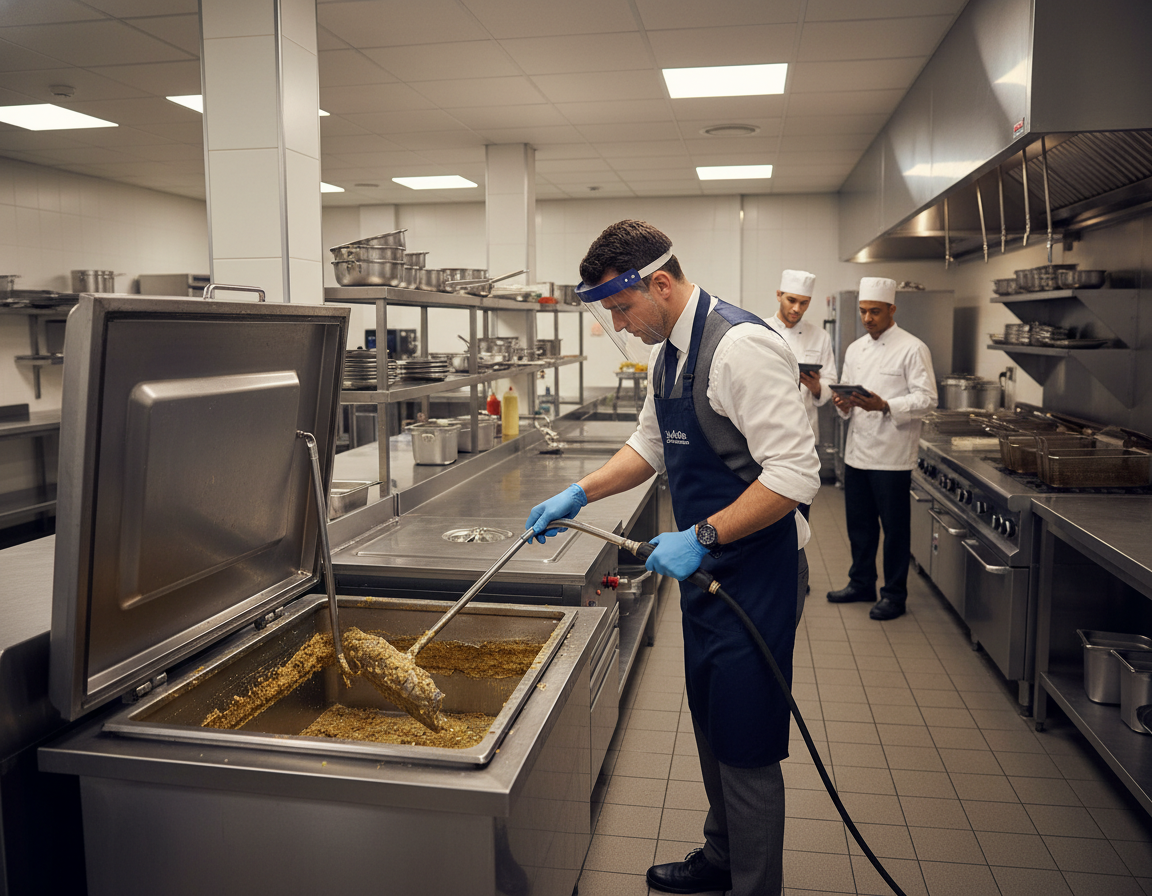
Professional interceptor cleaning is a complex service operation. The work requires heavy-duty pump trucks and direct access to the site. Our certified technicians follow a careful and detailed sequence.

  • Safe Removal Of Heavy Covers: Concrete or metal lids are lifted to access the unit’s interior compartments.
  • Pump Out Thousands Of Gallons: High-capacity vacuum trucks remove all liquid waste, fats, oil, and settled solids.
  • Complete Compartment Cleaning: Each chamber is scrubbed and washed to remove hardened residues.
  • Inspect Critical Components: The inlet and outlet tees are checked for blockages that can hinder proper flow.
  • Evaluate Structural Integrity: The unit is inspected for cracks, leaks, and signs of wear that may lead to failure.
  • Test For Groundwater: Technicians check for water infiltration, which may indicate serious containment issues.

Those added inspection steps are extremely important. They help catch small problems before they become expensive plumbing emergencies or environmental hazards.

Most of these large units follow a quarterly management schedule of every three months. However, high-volume restaurants and facilities with heavy cooking output may require monthly service.

A DIY attempt on an interceptor is extremely risky. Incorrect cleaning can cause system failure, sewage backups, and severe code violations. Professional cleaning services are non-negotiable.

We are fully equipped to handle these large-scale jobs. Our equipment includes the right trucks and pumps to handle any size commercial kitchen interceptor. Our expertise ensures the job is done safely and efficiently.

Property managers should maintain complete records of every interceptor cleaning. Detailed logs are a focal point during health department inspections. Those records clearly demonstrate your compliance with local regulations.

Maintaining your grease interceptor properly protects more than just your facility. It also protects the city’s broader sewer system from costly blockages. That proactive grease management helps you avoid major cleanup fines.

Any business that relies on these critical systems needs a reliable partner. Our team provides the dependable service required to keep your large-scale grease trap working at its best. It is an investment in smooth operations and peace of mind.

Beyond The Trap: Professional Kitchen Exhaust Hood Cleaning

True kitchen protection involves two priorities: the interceptor beneath your feet and the exhaust system overhead. While proper grease management for drains is essential, the air above your stoves demands equal attention. A complete safety plan addresses both areas together.

Your ventilation hood operates hard every single day. It pulls away smoke, heat, and airborne fats from cooking. If not serviced regularly by professionals, this system turns into a hidden risk.

Our team offers specialized cleaning services for these important components. Our team helps ensure your entire kitchen operates safely and efficiently.

Why Hood And Duct Cleaning Is Critical

Grease buildup inside hoods, ducts, and fans presents a serious fire hazard. A single spark can ignite this hardened layer of grease explosively. Such an event threatens your business, your equipment, and everyone inside.

When the exhaust system is clogged, it also fails at its main purpose. That causes ventilation efficiency to fall dramatically and creates several issues.

Low air quality allows irritants and odors to build up in the space. Heat can build up excessively, making the work environment uncomfortable. Your equipment then has to work harder, which increases energy costs.

Professional maintenance on a regular basis is not merely a recommendation. It is required under Los Angeles fire codes and health regulations. The rules are based on NFPA standards for commercial kitchens.

Compliance protects your operation from fines and mandatory closures. It is a non-negotiable part of responsible restaurant management.

Our Full Exhaust System Cleaning Service

Our thorough process begins with a detailed inspection of your entire system. Our team looks for damage, weak points, and other potential issues. This assessment guides our customized approach.

Our technicians carefully scrape thick residue from hood filters and interior surfaces. They then degrease the ductwork and fan components. We use food-safe, high-tech cleaning materials for this task.

Our advanced techniques deliver a deep clean while protecting your valuable kitchen assets. The goal is to restore optimal airflow and performance.

This service delivers multiple important benefits for your commercial kitchen. The immediate fire risk is significantly reduced. This also helps eliminate foul odors from old cooking oil.

Your appliances and vents function more efficiently, helping save energy. Staff also benefit from a healthier environment and better indoor air.

At the end of service, we issue a formal certificate of cleaning. This document serves as proof of compliance during inspections. Fire marshals and health departments often require this record.

Protecting your staff’s well-being is a top priority. Properly cleaned exhaust systems reduce respiratory irritants and excess heat stress. It contributes to a safer, more productive workspace.

Think of our team as your one-stop partner for complete kitchen grease control. We handle everything from the trap under the sink to the hood over the stove. That integrated approach helps keep your business running smoothly.

Our team has spent years helping establishments across the city meet safety needs. You can trust our experienced team to protect your customers and your livelihood.

Making Los Angeles Health Code Compliance Simple

Staying compliant with health codes should not be a constant source of anxiety for your business. Navigating the specific regulations in this city can feel overwhelming. We are here to change that.

Our team is here to turn a complex regulatory burden into a straightforward, managed service. You focus on your customers and your craft. We take care of the details of compliance.

Our technicians are continuously trained on the latest state and local regulations. They master laws regarding FOG disposal and kitchen safety standards. This ensures every job is eco-friendly and fully compliant.

Our entire service process is designed with compliance in mind. It begins by documenting initial grease levels. It finishes with proper waste disposal at approved facilities.

We provide you with detailed reports and certificates after each visit. This documentation creates a clear record for health inspectors. This acts as your proof that due diligence was performed.

Typical pitfalls include infrequent cleaning and poor waste handling practices. Our scheduled maintenance prevents these issues before they start. This serves as a proactive layer of protection for your business.

Consistent, documented service from a licensed professional remains your best defense. It’s the most reliable way to pass surprise health inspections. Inspectors often look for a clear history of proper management.

We bring expertise that applies to all kinds of establishments in the industry. Whether you operate a busy restaurant, a hotel, or an institutional cafeteria, we understand your specific needs. Local codes can differ.

We position ourselves as your true compliance partner. Our service includes reminders for scheduled trap cleaning and updates whenever regulations change. That partnership keeps you informed and prepared.

With our team managing your grease management, you can focus confidently on daily operations. That means your commercial kitchen can stay aligned with all Los Angeles health codes. This is the kind of peace of mind that comes from working with professionals.

Supporting All Types Of Los Angeles Food Establishments

The food scene in this city is a vibrant tapestry of different flavors and service styles. Each venue, from a food truck to a five-star restaurant, contributes to our rich culinary culture. Our team is proud to support every segment of this dynamic industry.

We understand that a busy diner and a large hotel have very different operational rhythms. We excel at customizing our service to fit the specific business needs of each client. This tailored approach ensures effective grease management for all.

Restaurants, Diners, And Quick-Service Kitchens

Busy, high-volume environments are where our team excels. We have years of experience with establishments where cooking oil and food byproduct production is constant. This demands a proactive and frequent cleaning service schedule.

Our team often schedules service during after-hours or early morning periods. That strategy helps avoid disrupting your busiest meal times and staff workflow. This courtesy supports a commercial kitchen that stays running smoothly.

Specific challenges like daily fryer oil disposal and rapid trap fill-ups are common here. Our services address these problems directly. Our team provides dependable, frequent grease trap cleaning so plumbing emergencies are less likely.

Hotels, Resorts, And Large Institutional Cafeterias

Bigger operations present their own unique set of needs. With multiple kitchens, banquet halls, and around-the-clock service, meticulous coordination is required. Our team is highly skilled at managing these complex environments.

We are fully equipped to handle the massive grease interceptors common in these facilities. This process includes detailed communication and coordination across departments. We also provide comprehensive documentation essential for corporate compliance audits.

That level of management is critical for safety and for meeting strict regulatory requirements. This helps shield the business from costly fines and service interruptions.

We also provide reliable service for many other establishments. Our team also supports bars, clubs, and entertainment venues. Our work is also trusted by assisted living facilities and healthcare center kitchens.

School and university cafeterias are also key partners. Our team supports corporate dining halls and co-working spaces that operate cafeterias. No matter the cuisine or the size of the operation, our core promise stays the same.

We deliver reliable, compliant, and thorough cleaning services. We aim to keep your operations safe, efficient, and focused on your customers.

Our friendly team takes time to understand your unique workflow and day-to-day pain points. We believe a one-size-fits-all solution doesn’t work in such a diverse market. We build our plan around your specific equipment layout and food waste output.

We invite every food service business in the Los Angeles area to experience our tailored service approach. Find out why we are the trusted choice for restaurants and commercial kitchens across the metro area. We’d love to discuss how we can support your success.

Proactive Practices That Minimize Grease Buildup

Strong grease management begins long before your professional service team shows up. Your everyday kitchen habits are the first and most cost-effective line of defense.

Good daily habits reduce excessive trap grease and help avoid costly plumbing problems. These habits help keep your business running smoothly while protecting your investment.

Begin with comprehensive staff training. Explain clearly how fats, oils, and grease (FOG) lead to backups. Make it real by showing how these issues affect their daily workspace.

A well-trained team understands the “why” behind the rules. This knowledge turns procedures into consistent, mindful actions.

Implement these simple but crucial practices every day:

  • Always Scrape First: Plates, pans, and cookware should always be scraped into the trash before washing. This prevents solid food waste from entering your drains.
  • Use Sink Strainers Diligently: Make sure every prep and dish sink has a basket or strainer. Empty them regularly during the shift, not only at closing.
  • Never Pour Fats Down Drains: This should be a firm rule. Liquid cooking oil, shortening, or pan drippings solidify in pipes. Small amounts still play a role in creating major blockages.
  • Wipe First, Then Wash: Use paper towels to wipe out greasy pans, griddles, and sheet trays. This quick habit helps capture a surprising amount of grease.
  • Recycle Used Fryer Oil: Use sealed, designated containers for waste oil storage. Partner with a recycler for proper disposal. It’s good for the environment and your pipes.

Your equipment setup matters too. Install grease-catching devices under fryers and other high-output stations. These devices catch kitchen grease at the source.

Water temperature also matters. Although hot water may melt fats temporarily, they cool and harden further down the line. Make sure the correct temperature is used for each task.

Choose a responsible team member to oversee daily grease management. That person can keep a simple log of best practices and watch for early warning signs.

This oversight creates accountability. It helps ensure these proactive steps become a permanent part of your restaurant‘s culture.

These habits work hand-in-hand with professional cleaning services. This can lengthen the time between required trap cleaning visits.

Think of this as protecting your plumbing investment. This proactive strategy reduces grease interceptor problems while supporting overall compliance.

This helps your commercial kitchen stay safe and efficient. Your customers benefit from a better experience, and your team works in a healthier environment.

Emergency Grease Trap Services For LA Businesses

For any restaurant manager, a sudden foul backup during peak service is a nightmare. Despite your best efforts with daily routines, unexpected plumbing crises can still occur.

An overwhelming odor, a surprise health inspector visit, or a complete sink stoppage creates immediate stress. These situations demand a specialized emergency solution to protect your business.

Our rapid-response service is designed for exactly these moments. Our goal is to act quickly so your kitchen is back running smoothly with minimal disruption.

We understand that every hour your operation is compromised means lost revenue. It also places immense strain on your staff. That is why we prioritize true emergency calls for same-day resolution.

We use a simple and direct dispatch process. A single phone call connects you directly with our team. Your job is prioritized, and we dispatch a fully equipped truck and technician crew to your site.

You should know what counts as a true plumbing emergency for your trap or interceptor:

  • Backups of sewage or waste water into sinks or floor drains.
  • Complete drain blockages that halt all kitchen operations.
  • Overpowering foul odors during customer hours.
  • An urgent notice before a scheduled health inspection.

Even during emergencies, our service follows a thorough cleaning process. It is performed with focused urgency so the immediate blockage or hazard is resolved first.

Even during a crisis, we never compromise on safety or compliance. All waste is handled and disposed of properly at approved facilities.

Keeping our number close at hand provides real peace of mind. It means a trusted professional is just one call away when something goes wrong.

As valuable as this rapid response is, it also highlights a key truth. Consistent, scheduled maintenance is the best way to prevent these costly and stressful problems.

Our friendly team is available for you 24/7. Local establishments count on us as a reliable emergency partner. Don’t let a trap crisis shut you down.

Clear Pricing For Grease Trap Cleaning

Let’s talk honestly about one of the biggest concerns for restaurant owners: the cost of professional grease trap cleaning.

You deserve clear answers with no confusion. We are committed to transparent pricing with no hidden fees or surprise charges.

We offer free and detailed estimates for every job. Knowing what affects the final cost helps you budget more effectively and compare services accurately.

Understanding The Factors That Influence Cost

Several key variables determine the investment for your maintenance. Here are the primary factors we evaluate:

  • The Size And Type Of Your Unit: We assess whether it is a small under-sink trap or a large outdoor interceptor. For larger units, pricing is often based on the volume of waste removed and the complexity of the job.
  • Buildup Level And Overall Condition: A badly neglected trap takes more labor and time to scrape clean. Staying on schedule is always more cost-effective than paying for emergency rescue service.
  • Physical Accessibility: We consider whether the unit is easy to access with our equipment. If the unit is in a tight basement or restricted space, the added time can affect the service quote.
  • The Job Location: Travel within the vast metro area can influence the final price. We account for this in our transparent estimates.

Additional services, such as kitchen exhaust hood maintenance or plumbing repairs, are priced separately. These will be clearly outlined in your customized estimate.

Our quotes are designed to be all-inclusive. They include skilled labor, specialized equipment, all waste disposal fees, and the detailed documentation you receive for compliance records.

It is wise not to choose a provider based only on price. A low-priced option may cut corners on safety, quality, or proper disposal practices.

This can lead to higher costs later from problems like repeat clogs or health code issues.

We aim to provide fair and competitive pricing that reflects the quality of service we deliver. Our pricing reflects the value of protecting your business from expensive disruptions.

Contact us for a transparent, no-obligation quote tailored to your specific needs. You will know exactly what to expect, with no surprises.

What To Look For In A Los Angeles Grease Cleaning Service

With so many providers in the market, knowing what separates a top-tier service from an average one can save you time, money, and stress.

This guidance helps you make an informed decision for your facility. Choosing the right partner helps safeguard both your daily operations and long-term success.

During your search, focus on several non-negotiable qualities. Paying attention to these factors helps ensure the maintenance is safe, compliant, and effective.

Key Credentials: License, Bond, And Insurance

This foundation is absolutely critical for any legitimate provider. A current business license proves the company operates legally within the city.

Bonding offers you financial protection if the job is not completed as agreed. It’s a sign of professional commitment to their work.

Liability insurance is your safeguard against accidents on your property. If any damage happens during the service, their policy covers the cost.

Before hiring any team, always ask to see proof of these credentials. A reputable company will provide this documentation willingly.

Credentials like these demonstrate that the company takes its business seriously. They also give you clear recourse if something goes wrong.

The Value Of Experience And Proper Equipment

Practical years of experience working with local kitchens are invaluable. This level of experience helps providers anticipate typical problems and support compliance.

They understand the unique demands of the Los Angeles food industry. This local knowledge results in smarter and more efficient service for your establishment.

The right equipment is also a key indicator of quality. Look for a provider that invests in high-powered vacuum trucks and pressure washers.

Specialized scraping tools and full safety gear are equally essential. This shows a commitment to doing the job thoroughly and safely.

A well-equipped team can handle any emergency or routine trap cleaning with confidence.

In addition to credentials and tools, consider these other important qualities. Ask for reliable references from similar local restaurants or commercial kitchens.

Make sure they provide flexible scheduling that works with your kitchen’s operating hours. This is important for minimizing disruption and keeping your business running smoothly.

Make sure they use food-safe cleaning supplies during interceptor cleaning. Harsh chemicals can damage surfaces and pose a risk to your food.

Look for a skilled, trained crew rather than a single individual. Good grease management and hood cleaning work often calls for a two-person team.

Clear communication and detailed service reports are signs of a true partner. The best providers educate you about your system and share useful maintenance advice.

Be alert for specific red flags during the vetting process. If a company will not provide proof of insurance, it should be avoided right away.

A very low quote often suggests that corners may be cut on safety or thoroughness. That can result in repeated plumbing issues and higher costs later.

Also be cautious of any provider that lacks a verifiable physical address in the area. That may indicate a lack of stability or local commitment.

At our company, we not only meet but exceed all these criteria. Our licensed, bonded, and fully insured team brings deep local experience.

We operate a modern fleet of equipment and use food-safe products. We offer flexible scheduling, clear documentation, and a partnership mindset.

For discerning Los Angeles business owners, the right choice becomes obvious. Work with a provider that values your kitchen‘s safety and your peace of mind just as much as you do.

Why This Is An Investment In A Cleaner, Safer Kitchen

Think of professional grease management not as a line-item expense, but as a strategic safeguard for your entire business. That change in perspective turns a routine service into one of the smartest operational decisions you can make.

It directly protects your major capital investments. Your commercial kitchen equipment, your plumbing infrastructure, and even the building itself are valuable assets.

Consistent grease trap cleaning reduces the risk of corrosive blockages and system failures. That proactive care helps extend the lifespan of these costly components.

Your reputation is another important asset protected by this investment. One health code violation or foul odor incident can quickly lead to harmful online reviews.

These incidents can destroy customer trust that took years to build. Consistent maintenance ensures a positive dining experience that encourages repeat visits.

It also helps protect your livelihood by reducing the risk of interrupted operations. When plumbing issues force emergency shutdowns, revenue stops and staff feel the strain.

A clean, safe kitchen fosters a productive work environment. Your team can focus on serving customers instead of managing problems.

Look at the numbers through the lens of risk mitigation. Scheduled cleaning services come with a predictable cost that is minor compared to potential fines.

It also pales next to the massive bills from lawsuits or sewer backups. This investment acts like an insurance policy for your daily business needs.

The return on this investment extends beyond your own walls. Responsible waste disposal reduces the risk of sewer overflows and environmental harm.

It aligns your restaurant with community sustainability goals. That contributes to a positive public image for your establishment.

In the end, this partnership delivers something priceless: peace of mind. Knowing that experts are managing a critical system frees up mental energy.

You can focus on growing your business and delighting your customers. Your kitchen stays running smoothly without constant worry.

For any food industry leader, this is a clear calculation. The price of a year of routine service is far less than one major disaster.

Choosing a reliable partner for interceptor and hood care is a foundational investment. That helps secure the long-term health and success of your operation.

Schedule Service And Reclaim Your Peace Of Mind

Do not let the risks outlined in this article become your reality. Right now, take a moment to check the date of your last service.

If your last service was more than 90 days ago, or if no record exists, you should consider maintenance overdue. Taking action now is the smart move for your business.

Scheduling with Grease Cleaning Pros is simple and fast. It is the first step toward reclaiming control over your kitchen’s safety.

Our simple process starts with a quick call or online form. Our team offers a friendly consultation so we can understand your exact needs.

Next, we work with you to choose a time that minimizes disruption to your daily operations. Taking this step today helps you proactively avoid the dangers and costs discussed here.

We are ready to welcome you as a long-term partner. Our team provides the level of service local kitchens deserve.

Choosing us means a cleaner, safer, and more compliant kitchen. You can focus on serving great food to your customers.

Contact us today for a free estimate or to schedule your next appointment. This investment in professional management helps secure your business’s future and your peace of mind.

Categories
Food & Restaurants

Grease Trap Pumping in Chatsworth Fine Dining Establishments Grease Management Strategies

Grease Cleaning Pros In Chatsworth specializes in grease trap cleaning and plumbing support in ZIP code 91311 and Chatsworth. Our team of Chatsworth grease technicians is dedicated to quick, effective grease cleaning. This ensures commercial kitchens, restaurants, and homes operate smoothly without interruptions.

View details about Grease Cleaning Pros in Chatsworth

Discover more about Grease Cleaning Pros in Claremont

This webpage is about Grease Cleaning Pros in Compton

We collaborate with local providers like Roto-Rooter for a wide range of plumbing and drain services. Our offerings include grease trap cleaning, sewer and drain cleaning, maintenance programs, high-pressure water jetting, and 24/7 emergency response. That supports consistent performance.

Our Chatsworth grease trap service is tailored for high-use kitchens and aging pipe systems. It caters to both busy restaurants and small commercial kitchens. Grease Cleaning Pros provides fast service to minimize downtime and safeguard your operations.

Why Grease Trap Cleaning Is Important For Chatsworth Restaurants And Businesses

A commercial kitchen’s health depends greatly on regular maintenance. This ensures plumbing remains clear and food prep areas stay sanitary. Grease Trap Cleaning is key to preventing fats, oils, and grease buildup. Such buildup can cause slow drains, foul odors, and service interruptions.

Regular maintenance reduces the need for emergency repairs. It also lowers the risk of kitchen backups. Such backups can disrupt operations and hurt a business’s reputation.

Health And Safety Concerns Of Neglected Grease Traps

Accumulated FOG can block sewers, causing backups into kitchens and dining areas. These backups bring contaminated water, strong odors, and can attract pests. They also increase mold risk. Roto-Rooter offers floodwater cleanup and mold remediation, which highlights the risks of plumbing failure.

Without maintenance, traps can compromise sanitation standards. That contamination raises the likelihood of failing public health inspections. It can even lead to temporary closures. Staff exposure to contaminated surfaces also creates workplace safety concerns tied to grease removal health risks.

Grease Cleaning Pros in Chatsworth

Los Angeles County Regulatory And Municipal Requirements

Municipal agencies enforce strict rules for maintenance and waste disposal. Compliance is necessary to avoid fines and permit issues. Los Angeles County grease regulations require scheduled cleaning and proper disposal.

Pumped grease must be handled by licensed waste haulers. Businesses should maintain service documentation for inspection purposes. Many local drain services and Roto-Rooter recommend cleaning every one to two years. Kitchens with heavy use may need shorter service intervals.

Operational Effects On Service Continuity

Neglected grease traps can cause slow drains, clogs, and emergency plumbing calls. Those disruptions interrupt service, create more downtime, and lead to customer complaints. Roto-Rooter provides same-day and 24/7 emergency plumbing, illustrating the cost and inconvenience of reactive repairs.

Proactive Grease Trap Cleaning prevents emergency repairs and keeps kitchens running smoothly. Consistent service is the best way to prevent kitchen backups and limit unexpected closures.

Potential Risk Main Cause Preventive Action
Sanitation failure FOG buildup in traps and drains Scheduled Grease Trap Cleaning plus records for inspections
Compliance fines Failure to follow disposal rules Use licensed waste haulers and comply with Los Angeles County grease regulations
Operational downtime Clogs, backups, and emergency repairs Preventive maintenance to stop kitchen backups and lower emergency calls
Health hazards Contaminated water, pests, mold growth Frequent cleaning, sanitation checks, and rapid response plans

Grease Cleaning Pros Serving Chatsworth

Grease Cleaning Pros In Chatsworth specializes in grease trap and drain management for both residential and commercial clients. This brief overview covers the services offered, the distinct needs of homes versus businesses, and the scheduling and emergency response processes in the area.

The company’s reputation and a detailed grease trap service overview are key factors in selecting a trustworthy provider. Grease Cleaning Pros provides a range of services that includes pump-outs, FOG waste removal, and hydro-jetting. They also carry out camera inspections, no-dig diagnostics, and provide full documentation for municipal compliance. Their team employs industry-standard equipment, similar to that used by companies like Roto-Rooter, and ensures transparent estimates and satisfaction guarantees.

Residential and commercial grease cleaning services are quite different. Commercial kitchens require ongoing maintenance to stay compliant with health codes and prevent service interruptions. Restaurants usually schedule service monthly to quarterly. Residential grease cleaning is usually less frequent, with homes typically needing service every 1–2 years unless there is heavy use or aging plumbing.

Service availability, scheduling, and emergency response reflect what the local market expects. Grease Cleaning Pros provides flexible daytime appointments and preventive maintenance plans tailored to busy kitchen schedules. They provide online and phone scheduling for routine estimates. For urgent needs, they provide same-day and after-hours emergency service similar to the availability of 24/7 plumbing support.

Technicians at Grease Cleaning Pros are trained in safe disposal and documentation to meet Los Angeles County regulations. They provide customer satisfaction guarantees, clear pricing, and routine inspection reports. That combination helps businesses and homeowners stay compliant and plan maintenance with confidence.

Proven Grease Trap Cleaning Methods And Technology

Effective grease management combines regular service with modern technology. Restaurants and commercial kitchens benefit from structured cleaning methods, advanced tools, and modern inspection techniques. These practices help keep drains flowing smoothly and support compliance with Los Angeles County regulations.

Standard Pumping And Waste Disposal Methods

The first step is removing FOG and solids from the trap and interceptors. They measure and document the volume of waste on site. Then, they load it into licensed tankers for transport.

All waste is taken to a permitted facility in accordance with county rules. Written service records are provided to clients for compliance tracking and audits.

Regular grease pumping helps stop FOG buildup before it leads to sewer backups and expensive repairs. Companies like Roto-Rooter recommend scheduled maintenance to reduce emergency calls and protect municipal sewer lines.

Advanced Cleaning With Hydro Jetting And High-Pressure Techniques

Hydro-jetting relies on high-pressure water to clear hardened grease, fats, and mineral buildup. This method cleans pipe walls more effectively than mechanical snaking, extending pipe life.

Local drain specialists in Chatsworth often suggest hydro jetting for recurring slow drains and persistent buildup. It’s the preferred solution for stubborn blockages and long-term performance.

Technicians evaluate pipe condition and adjust pressure settings to clear obstructions without damaging older infrastructure. Combining hydro-jetting with pumping achieves the best results for heavily used kitchens.

Inspection Tools: Camera Inspections And No-Dig Technology

High-definition camera inspections help crews assess pipe condition, locate blockages, and confirm cleaning results without any excavation. Video footage becomes part of the service record and helps with repair planning.

No-dig technologies used in sewer line repairs help minimize disruption to landscaping. These tools are emphasized by Roto-Rooter and similar providers when dealing with localized damage or root intrusion.

Combining camera inspections with pumping and hydro-jetting offers a complete maintenance approach. This sequence supports accurate scheduling and reduces the risk of repeat clogs.

What To Expect From Maintenance Plans And Transparent Pricing

Effective kitchen management depends on proactive grease management. Grease Cleaning Pros offers tailored maintenance plans that match your kitchen’s needs and local regulations. Technicians assess flow rates and system age to suggest service frequencies. Restaurants and high-volume kitchens often benefit from monthly, quarterly, or biannual service. Residential clients generally receive service every one to two years, with adjustments made for older systems or increased use.

Regular pump-outs, camera inspections, and interceptor monitoring are included in each plan. Detailed service records are also provided for audit purposes. The schedule is customized so it reflects real usage rather than a one-size-fits-all template. That documentation helps meet health standards in Los Angeles County and local municipalities.

Grease trap service pricing is transparent, and estimates are provided upfront. Costs cover pumping, hydro-jetting, camera inspections, waste hauling, and repairs. Businesses are encouraged to request written estimates and service agreements for budgeting and compliance.

A grease cleaning guarantee and follow-up support are provided by Grease Cleaning Pros if any rework is required. The guarantee supports quality on scheduled services and outlines response times for return visits. That level of assurance helps maintain service schedules while reducing surprise expenses.

Collaboration with other trades ensures uninterrupted service when issues arise beyond the interceptor. Grease Cleaning Pros collaborates with licensed plumbers and appliance specialists, including vendors for sewer line excavation and water heater repairs. Those waste-hauling partnerships support lawful disposal and proper documentation.

Below is a practical comparison of typical plan options and included elements to help you choose a fit for your operation.

Plan Type Service Frequency What’s Included Best For
Standard plan Every quarter Pump-out, basic inspection, service log, disposal Cafes, small restaurants, and light food-prep operations
High-Use Monthly service Pump-out, camera inspection, hydro-jetting as needed, interceptor monitoring Busy restaurants and catering kitchens
Residential plan Every 12 to 24 months System assessment, pump-out if needed, and recommendation report Homes, small apartments, low-use systems
Compliance Plus Flexible, inspection-based Detailed records, municipal report prep, priority response, grease cleaning guarantee Large operations, multi-site chains, regulated facilities

Practical Benefits And Local Case Examples

Regular grease trap care yields tangible results for Chatsworth kitchens. Scheduled maintenance ensures smooth drain flow and reduces the risk of sudden blockages. This consistent upkeep supports peak-hour operations and reduces urgent service calls to providers offering same-day emergency help.

Reduced Downtime And Better Kitchen Efficiency

Regular cleaning helps stop slow drains and unexpected clogs so food prep lines continue moving. Smooth equipment performance improves staff productivity and helps shifts finish on time.

Local companies do offer emergency services, but those interventions are often expensive and disruptive. Preventive maintenance reduces reliance on last-minute fixes, leading to less downtime for Chatsworth businesses.

Cost Savings From Preventive Maintenance

Scheduled service reduces the chances of expensive work like sewer excavation and repeated hydro-jetting. Brands like Roto-Rooter highlight major repair interventions that regular maintenance can prevent.

Predictable maintenance allows for steady budgets and better return on investment. Lower emergency call volume leads to lower total costs and makes the savings from preventive grease maintenance easier to see.

Customer Satisfaction And Community Reputation

Kitchens that stay clean and compliant tend to achieve better health inspection results and earn greater customer trust. Documenting regular service helps businesses demonstrate adherence to proper standards to regulators and guests alike.

Local providers often report fewer odor complaints and more repeat customers after regular service. The combined benefits of grease trap cleaning help strengthen reputation within the Chatsworth community.

Conclusion

For restaurants and businesses in Chatsworth, proactive grease trap cleaning is essential. It helps prevent health risks, fines, and costly downtime. Regular maintenance helps reduce clogs, avoid sewer backups, and maintain compliance with Los Angeles County regulations. This preventive approach helps protect staff, customers, and overall business profitability.

Essential services from Grease Cleaning Pros In Chatsworth include pump-outs, hydro-jetting, and camera inspections. They provide tailored maintenance plans along with transparent pricing and emergency response options. Partnering with trusted local providers and licensed waste haulers helps ensure responsible handling and proper documentation.

Consistent, documented service is the best protection against unexpected closures and reputational harm in ZIP 91311 and surrounding areas. To ensure uninterrupted operations, schedule an assessment or set up a maintenance plan today. Contact Grease Cleaning Pros In Chatsworth for a written estimate, service scheduling, or emergency grease trap cleaning support. Dependable preventive grease management keeps your business operating smoothly.

Categories
Food & Restaurants

Grease Cleaning Pros in Palmdale: Flexible Scheduling Options

This page is built around a commitment to grease cleaning excellence in Palmdale. Grease Cleaning Pros Palmdale provides targeted grease trap cleaning for many types of commercial kitchens. These include restaurants, caterers, hotels, cafeterias, and other facilities throughout Palmdale, California.

View details about Grease Cleaning Pros in Palmdale

Website about Grease Cleaning Pros in Sylmar

Explore more about Grease Cleaning Pros in Lancaster

Our mission is clear: to educate business owners about the importance of reliable grease trap service in Palmdale. Regular service not only helps ensure compliance, but also keeps kitchens operational and supports successful health inspections. Grease Cleaning Pros Palmdale helps maintain efficiency through organized procedures and timely scheduling.

Explore the reputation of Grease Cleaning Pros on Instagram and Facebook. Log in or sign up to see before-and-after photos, read customer reviews, and book services directly. This makes it easy to verify service quality and arrange appointments.

Meta title: Palmdale’s Top Grease Cleaning Pros Meta description: Select Grease Cleaning Pros for exceptional grease cleaning in Palmdale. Our quality service helps keep your establishment spotless and compliant.

Why Choose Grease Cleaning Pros For Grease Trap Cleaning In Palmdale

Grease Cleaning Pros has earned a solid reputation among Palmdale’s restaurants and cafes. They are known for prompt service, organized scheduling, and technicians familiar with local regulations. Their social media presence on Instagram and Facebook showcases their recent work, customer feedback, and service notes, highlighting their consistent quality.

Grease Cleaning Pros is staffed by local grease trap professionals with broad experience in commercial kitchens. They handle both routine maintenance and emergency callouts with meticulous attention. Their local presence helps restaurants stay open and kitchens run efficiently.

Maintaining grease compliance in Palmdale is a central part of their work. Their technicians work in line with Los Angeles County guidelines and municipal grease waste codes. Regular grease trap pumping reduces the risk of sanitary code violations and sewer blockages that can result in fines.

Proper disposal is critical for public health and environmental protection. Grease Cleaning Pros records each removal and supplies disposal receipts that help satisfy inspectors. Such records are essential during health inspections and regular audits, as they help prove compliance.

Routine grease trap maintenance reduces clogs, controls odors, and helps extend equipment life. Scheduled cleanings help kitchens avoid frequent emergency callouts and reduce downtime. Grease Cleaning Pros provides detailed service reports, making inspections straightforward and giving owners confidence.

Choosing Grease Cleaning Pros means working with technicians who know local standards, provide documented reports, and stay connected with customers through social media. This blend of service, transparency, and community knowledge helps businesses stay compliant and maintain a clean environment.

Grease Cleaning Pros in Palmdale

Grease Cleaning Pros Service Offerings

Grease Cleaning Pros In Palmdale offers a wide range of services to ensure commercial kitchens remain clean and meet health standards. The team combines extensive experience with advanced equipment. This approach minimizes downtime and safeguards plumbing systems.

The main service involves thorough grease trap pumping and cleaning. That means removing grease, solids, and wastewater from the system. Technicians manually scrape baffles and covers when necessary. They then use high-pressure washing and either vacuum trucks or portable pumps depending on trap size and accessibility.

Inspection and maintenance plans are customized to match each client’s kitchen requirements. These plans include scheduled pump-outs, regular visual inspections, and grease depth measurements. Clients receive detailed logs and tailored service intervals to prevent grease buildup and extend equipment life.

Immediate-response emergency grease removal services are available for clogs, overflows, or trap failures. The rapid-response team performs on-site diagnostics and temporary fixes to prevent sanitary issues. They then conduct a full cleaning, safe disposal, and provide recommendations to prevent future incidents.

Companies can schedule routine service or request urgent assistance using direct booking options and social media platforms like Instagram and Facebook. This ensures clear communication and documented service reports, making it simple to manage both scheduled and emergency needs.

Service Type What’s Included Response Time
Grease trap cleaning and pumping Removal of grease and solids, baffle scraping, high-pressure washing, and use of vacuum trucks or portable pumps Planned service; same-week response for most requests
Inspection and maintenance plans Scheduled pump-outs, grease depth measurement, visual inspections, record-keeping, tailored intervals Monthly to quarterly, customized
Emergency grease removal and clog response On-site diagnostics, temporary mitigation, immediate cleanup, follow-up disposal and repair recommendations Immediate; rapid-response teams available

Grease Cleaning Pros In Palmdale

Grease Cleaning Pros offers top-notch grease trap cleaning services in Palmdale. They offer routine inspections, maintenance plans, and emergency grease removal. Their team brings years of experience, licensed technicians, and strict compliance with health codes and environmental rules.

Their service area includes Palmdale and the Antelope Valley region. They offer weekday scheduling, including early-morning and late-evening time slots for restaurants. Emergency service is also available for urgent situations.

They serve a variety of facilities, including independent restaurants, hotel kitchens, and school cafeterias. Their teams arrive equipped with certified gear and documentation to ensure compliance during inspections.

Company profile overview

Their commitment to safety and proper waste handling is evident in their company profile. Technicians use approved methods for pumping, transport, and disposal. They provide records and reports after every visit to help managers track maintenance and meet regulatory requirements.

Service area and availability

Their primary service area includes Palmdale, Littlerock, Lake Los Angeles, Lancaster, and the Antelope Valley. They provide standard bookings from Monday through Friday, with limited Saturday service. Their emergency team works extended hours to respond quickly to backups.

Contact And Booking Options

Companies can book grease trap cleaning or ask for an estimate by calling, emailing, or submitting the website form. They also accept Instagram and Facebook messages for appointment requests and display before-and-after galleries. Certain features require logging in to interact.

For quick action, clients can call for same-day checks when available. For ongoing programs, the online form can be used to set recurring service intervals and receive digital reminders to remain compliant.

Grease Trap Cleaning Cost Guide And Pricing Transparency

Understanding pricing is key for restaurant managers to budget effectively and avoid unexpected costs. This guide covers the factors that influence Grease Trap Cleaning costs, typical pricing ranges for different trap sizes, and the value that goes beyond price alone.

Pricing Factors To Consider

The grease trap size in gallons affects labor and disposal requirements. Traps under 50 gallons are usually less expensive to service than systems exceeding 200 gallons.

Service frequency also affects the total yearly cost. Scheduled weekly or monthly plans are often more economical than emergency cleanings.

The location and accessibility of the trap also play a role. Traps located indoors or in hard-to-reach areas require more time and effort. In contrast, curbside units are quicker and less expensive to service.

The amount of grease and solids affects the time required for pumping and the related disposal fees. Substantial buildup can make vacuum truck service necessary instead of portable pumps.

Extra costs can arise from special equipment needs, repairs, or line clearing. Disposal fees for FOG and regional hauling rates vary by county.

Typical Price Ranges And Estimates

A price estimate provides a helpful baseline for what to expect. Routine maintenance for small commercial traps (20–50 gallons) generally ranges from $90 to $175 per visit.

For medium traps (50–150 gallons), pricing usually falls between $150 and $350 per visit, depending on accessibility and grease buildup.

Large systems over 150 gallons or multi-compartment traps may cost $300 to $700 for one cleaning. Emergency service often carries higher charges.

Maintenance plans help reduce the cost per visit while lowering the chance of costly emergency removals. It is best to request a grease trap cleaning estimate after an on-site inspection or by sending clear photos through Instagram, Facebook messages, or the company’s booking form.

Value Considerations Beyond Price

Documentation provided after service supports compliance during health inspections. Detailed service reports and invoices can help businesses avoid fines and shutdowns.

Regular maintenance prevents emergency stoppages and extends the life of kitchen drains and equipment. Fewer emergency service calls mean less downtime for staff and customers.

Grease Cleaning Pros’s transparent invoicing and clear service reports add measurable value for restaurant managers and facility teams. Investing in preventive plans can lower long-term operating costs while improving kitchen performance.

Service Type Usual Range (USD) Typical Use
Routine clean for small trap (20–50 gal) $90 – $175 Monthly or quarterly service
Medium trap routine clean (50–150 gal) $150 – $350 Monthly or biweekly maintenance plans
Large trap or multi-compartment (>150 gal) $300 – $700 Quarterly maintenance or special service calls
Emergency same-day service $250 – $900 Unexpected clogs or overflows
Maintenance plan average (per visit) $80 – $300 Discounted rates for contracts

For an accurate grease trap cleaning estimate, arrange an on-site visit or send detailed photos. Final Grease Cleaning Pros In Palmdale pricing and total Grease Trap Cleaning cost depend on local factors and the exact site conditions.

Step-By-Step Grease Trap Cleaning Process

It is important for restaurant managers to understand the grease trap cleaning process. This helps them plan downtime and maintain compliance. The steps involve what technicians inspect, how waste is handled, and what customers receive afterward. Grease Cleaning Pros In Palmdale uses strict protocols to safeguard plumbing and follow local regulations.

Initial Inspection And Assessment

Technicians perform a visual inspection of the trap and its connected lines. They measure grease and solids depth, inspect the condition of the baffles, and look for structural damage.

They also review the service history and ask staff about recent issues. If access is restricted, a preliminary assessment can be done remotely using photos or video sent via Instagram or Facebook messaging.

Pumping, Cleaning, And Disposal Procedures

Waste contents are safely pumped into vacuum trucks or portable tanks for transport. Technicians manually remove solids and scrape built-up grease from the walls and edges.

When necessary, interior surfaces are power washed, and dewatering and wastewater separation are carried out where required. The collected waste is then taken to licensed rendering or disposal facilities, following mandated grease disposal procedures.

Post-Clean Reporting And Recommendations

Clients receive a service report showing the grease depth removed, before-and-after photographs, and an itemized invoice. That report includes a recommended service interval based on the buildup that was measured.

If corrective work is needed, technicians will suggest repairs, line jetting, or changes to the service schedule. The reports can also be shared on client-requested platforms like Facebook for easy access and record-keeping.

Process Step Work Performed Customer Benefit
Initial inspection Inspection, measurements, and service history review Clear scope and accurate cost estimate
Removal Suction of liquids and solids into certified trucks Safer removal with lower clog risk
Manual interior cleaning Scraping and manual removal of solids Thorough interior cleaning
Power wash & dewater High-pressure cleaning with water separation Cleaner trap and compliant discharge
Disposal Transport to licensed rendering or disposal sites Helps meet environmental rules and grease disposal procedures
Service reporting Photos, measurements, invoicing, and recommendations Clear records for inspections and internal documentation

Palmdale Client Stories And Social Proof

Restaurants and commercial kitchens in Palmdale have seen noticeable improvements after partnering with our team. They’ve experienced fewer grease backups, less kitchen odors, and smoother health inspections. Many owners have noted a significant decrease in emergency calls once regular service started.

Examples And Outcomes From Real Clients

A diner on Sierra Highway went from constant clogging to steady flow after only two cleanings. The manager observed faster sink drainage and a cleaner workspace during inspections. A catering kitchen on Palmdale Boulevard passed an unexpected county health inspection with no grease-related violations.

Instagram And Facebook Reviews And Engagement

Grease Cleaning Pros shares Grease Cleaning Pros In Palmdale reviews and service highlights on Instagram and Facebook. Clients often praise the timeliness and professionalism of our service. Both platforms require login for full interaction, aiding businesses in vetting local providers.

Before-And-After Visual Evidence

Before-and-after photos vividly depict the extent of grease buildup before and the clean interior afterward. These images are included in client reports and social galleries to support inspection records. Potential customers are encouraged to request visual documentation for their records and compliance reviews.

Client Type Common Issue Outcome After Service
Family diner Slow drains, recurring backups Regular pumping; backups stopped; faster sink flow
Large catering kitchen Heavy odors and inspection risk Deep cleaning; odor resolved; inspection passed
Cafe chain location Repeated emergency service calls Maintenance plan added; emergency calls reduced by 80%
Food truck fleet Grease buildup in holding tanks Scheduled maintenance; cleaner tanks; easier operations

Grease Reduction Tips For Palmdale Businesses

To keep a kitchen running smoothly, it’s essential to adopt proactive habits. These habits help reduce blockages and foul odors. With daily habits and scheduled services, businesses in Palmdale can better control grease build-up. That approach helps protect drains, maintain compliance, and lower long-term costs.

Best Practices For The Kitchen

Installing grease interceptors at sinks and commercial dishwashers is a key step. These devices trap fats before they reach the plumbing. Place grease collection containers near fryers and large pots to catch oil for proper disposal. It is also important to use strainers on sink drains and encourage staff to dry-wipe pans and utensils before washing.

Routine Checks And Staff Training

Proper training on grease handling and safe disposal is critical for kitchen teams. Daily wipe-downs and the removal of food solids from traps and drains are essential. Quick visual checks of trap access lids and drain flow should be performed at shift changes. Keeping a log of these routines supports inspections and reinforces the importance of grease trap maintenance.

How To Schedule Preventive Maintenance With Grease Cleaning Pros

Establish a recurring service schedule based on kitchen load. Weekly service fits heavy use, biweekly service suits medium use, and monthly service works for lighter use. Preventive maintenance plans from Grease Cleaning Pros In Palmdale include documented service reports and reminders. Utilize Instagram and Facebook for booking and quick updates to maintain consistency.

Action How Often Advantage
Dry-wipe pans before washing Every day Reduces oil entering drains, extends cleaning intervals
Empty grease collection containers After each service, or daily in heavy-use kitchens Helps prevent overflow and odors while simplifying disposal
Drain and trap visual checks At shift changes Helps identify slow drains and blockages early
Professional Grease Trap Cleaning best practices service Weekly–Monthly Supports compliance and lowers emergency callouts
Maintain staff training records Continuous Aids inspections and promotes consistent staff performance

Combining daily kitchen habits with a formal maintenance plan yields the best results. Adhering to grease trap maintenance tips and best practices ensures compliance and minimizes the risk of costly interruptions.

Closing Summary

Grease Cleaning Pros grease service offers dependable, local expertise for Grease Cleaning Pros In Palmdale. Their team specializes in grease trap cleaning, which is essential for Palmdale businesses. They offer thorough inspections, detailed reports, and transparent pricing. This ensures kitchens remain compliant and operate efficiently.

Regular maintenance by Grease Cleaning Pros In Palmdale prevents fines, unpleasant odors, and unexpected shutdowns. Their planned maintenance and emergency response work together to protect operations. By meeting health and environmental standards, they help protect your business.

To schedule an inspection or enroll in a maintenance plan, call or visit the Grease Cleaning Pros grease service website. Their Instagram and Facebook pages display before-and-after photos and customer reviews. Interaction may require logging in.

Choosing Grease Cleaning Pros In Palmdale means combining experienced local service, transparent pricing, and proactive care. This safeguards your business and maintains compliance. Contact them today to set up a routine that fits your kitchen’s needs.

Categories
Food & Restaurants

Emergency Response Teams Specializing in After-Hours Grease Trap Repair Palmdale

Grease Cleaning Pros offers nationwide support for food-service kitchens needing Grease Trap Repair along with continued upkeep. Our crew of certified and licensed professionals pairs data-driven monitoring and on-site work. They handle everything from routine cleaning all the way to advanced restorations as well as new installs.

Find Out More About Grease Trap Pumping
Website About Grease Trap Pumping

Effective management of fats, oils, and grease helps prevent plumbing failures that may close down a busy kitchen for multiple days. Grease Cleaning Pros delivers hands-on upkeep , scheduled every 30–90 day interval depending on kitchen volume. They also run sustainable options for waste cooking oil collection along with reprocessing into renewable biodiesel.

Our process is built on construction-industry and commercial plumbing best-practice standards. It satisfies municipal health & environmental regulations and keeping downtime low. For operators seeking consistent operation and compliance, Grease Cleaning Pros delivers expert repairs, installations, and consulting. Which keeps kitchens running smoothly.

Why Grease Trap Repair Is Critical For Commercial Kitchens

Reliable grease interceptor repair is essential for keeping a kitchen’s productivity. Problems develop once fats, oils, and grease climb past twenty-five percent of the trap’s volume. Quick action from experienced teams helps ensure proper flow returns, avoiding costly downtime.

Protecting Kitchen Operations And Avoiding Costly Downtime

Stopped-up drains and slow sinks often signal equipment failure. Overlooking these symptoms may cause short-term shutdowns and costly fixes. Expert grease-trap cleaning services provide rapid solutions, ensuring kitchens get back open quickly.

Ongoing maintenance prevents blockages and breakdowns. Routine cleanouts and inspections minimize the risk of surprise failures, reducing emergency repair costs.

Staying Compliant With Local Health And Environmental Codes

Local requirements required documented cleaning timelines and correctly sized interceptors. Accurate records kept by licensed techs are critical for inspection readiness and compliance. Measuring FOG levels helps ensure kitchens meet environmental standards.

Adhering to service standards minimizes risk and safeguards your facility’s reputation. Proper servicing streamlines permit renewals and health checks.

Grease Trap Cleaning & Pumping

Environmental And Recycling Benefits

Collecting and recycling waste cooking oil prevents water pollution and cuts GHG emissions. It can be turned into biodiesel, animal feed, and everyday products.

Service providers who offer grease interceptor repair services and oil collection programs help food-service operators reduce waste. They capture value and meet sustainability goals, turning waste-handling costs into eco benefits.

Common Risk Operational Impact Preventive Step
FOG buildup over 25% Operational failure, slow drains, odors Routine commercial grease trap maintenance and monitoring
Gaps in cleaning records Fines and inspection failures Documented kitchen grease trap maintenance by licensed technicians
Improper used-oil disposal Environmental harm, regulatory action Work with grease trap cleaning services that include oil recycling
Mechanical damage and leaks High repair costs and downtime On-time interceptor repair plus routine inspections

Typical Problems That Require Grease Trap Repair

Grease traps and interceptors often hide problems until they trigger a serious mess. Catching warning signs early helps keep kitchens operating smoothly and sidesteps expensive emergency repairs. Below, we explore common signs, structural and mechanical issues, and the consequences of delaying repairs.

Warning Signs Of Failure To Watch For

Continual foul odors by the interceptor often signal grease buildup. Smells like sewage often suggest trapped solids and anaerobic breakdown.

Slow drainage, multiple fixtures overflowing, or toilets gurgling while other lines run often points to a deeper buildup. Repeat clogs that keep returning after snaking the line indicate grease that has hardened downstream.

Obvious grease at the interceptor’s outlet, pooling water above the unit, and constantly greasy floors even after cleaning are major red flags. These red flags call for timely grease trap repair service.

Structural Issues And Mechanical Failures

Worn lids or rusted covers and broken baffles lower the separation process. Systems that are incorrectly sized or had poor installation let oil to pass through into sewer lines.

Collected solids and solidified grease can form blockages in downstream piping. Removing years of buildup sometimes requires commercial hydro jetting at roughly 4000 PSI to bring flow back.

Licensed grease-trap technicians evaluate structural issues and suggest focused fixes. Choosing reputable grease trap specialists makes sure repairs follow local codes and support uninterrupted operations.

Consequences Of Delayed Repair

Allowing issues to continue can escalate to main-line blockages and backup events. Unexpected closures for repairs reduce sales and disrupt staff schedules.

Regulatory fines and reputational damage often follow incidents when operations violate health and environmental rules. Fixes become more complex and expensive as grease solidifies and moves through piping.

Scheduled grease trap cleaning services plus timely grease trap repair reduce the likelihood of high-cost emergency calls. Investing in routine maintenance with licensed grease-trap techs reduces downtime and avoids major plumbing campaigns.

Issue Common Indicator Typical Fix
Odors and sink smells Persistent sewer/rotten odor near the trap Pump-out, deep cleaning, and odor neutralization by licensed grease trap technicians
Slow draining and backups Multiple drains slow, or toilets gurgle Hydro jetting and pipe descaling, followed by scheduled grease trap cleaning services
Grease visible at outlet Grease floating, water pooling above the interceptor Separator tune-up, baffle repair, or replacement handled by reliable grease trap specialists
Structural failure Rusted lids and broken/missing baffles Part replacement, reseating, or system upgrade performed by licensed grease trap technicians
Advanced pipeline buildup Recurring clogs after snaking, hardened grease downstream High-pressure hydro jetting and a longer-term maintenance plan provided by grease trap repair professionals

Grease Trap Repair Services

Successful grease trap repair service starts with a thorough assessment. Technicians first visually check the lids, baffles, and piping. They test FOG levels and check downstream piping for buildup and restriction. Precision monitors track FOG accumulation, helping ensure timely service.

Testing and diagnostics reveal the root causes, like a sizing mismatch or structural damage. This insight determines whether a simple repair or a larger intervention required. Licensed techs record findings with photos and reports for owners and regulators.

Repair Methods And Best Practices

Common repairs often include pumping out and cleaning, changing damaged parts, and sealing and welding corroded sections. Commercial hydro jetting is often used to remove hardened grease inside pipes. Every method aims to restore flow and efficiency.

Best-practice steps include staying aligned with local codes and keeping thorough records. Scheduling repairs in off-peak windows reduces disruption. Bundling repairs with preventive cleaning and monitoring reduces repeat service visits. Relying on licensed technicians supports standards compliance and helps protect permitting status.

When A Replacement Or Professional Installation Is Needed

Replacement required for major structural damage, such as heavy corrosion or failed baffles. It may also be required if a unit is undersized or when repeated repairs fail. In those cases, grease interceptor repair may not suffice.

A professional installation helps ensure correct sizing and placement. Small kitchens often need 20–50 gallon traps, but high-volume kitchens often require 500–5,000 gallon interceptors. Hiring skilled teams for the installation reduces future issues and keeps you compliant.

Issue Standard Repair When Replacement Is Advised
Clogged outlet or pipe buildup Hydro jetting and targeted cleaning Repeated clogs caused by downstream buildup even after cleaning
Broken baffles or rusted baffles Baffle replacement, welding seals Extensive structural corrosion affecting separation
Damaged lids and seals Seal replacement and lid repair Cracked sumps that compromise integrity
Unit undersized for kitchen volume Temporary maintenance and monitoring Move to a larger interceptor installed professionally
Continual FOG accumulation More frequent cleaning and monitoring systems Switch to a properly sized grease interceptor

Owners should consider long-term reliability when deciding between repairs versus upgrades. For multi-faceted locations, getting both repair and installation quotes is smart. Certified teams deliver end-to-end interceptor management and ongoing service programs for steady kitchen operations.

Maintenance, Cleaning, And Preventive Services From Grease Cleaning Pros

Regular maintenance is key to keeping kitchens running efficiently and preventing high-cost backups. Grease Cleaning Pros crafts service plans that fit each facility’s needs. These plans help operators adhere to local regulations, lower odor complaints, and avoid emergency call-outs.

Regular Cleaning Schedules And Tailored Maintenance Plans

The suggested frequency for pump-outs differs between 30 to 90 days, depending on kitchen output. High-volume fry operations usually need monthly service, while smaller cafes might only need quarterly service.

Grease Cleaning Pros evaluates FOG output levels, checks kitchen throughput, and checks city codes to build custom schedules. Every plan features scheduled pump-outs, inspection reports, compliance documentation, and an emergency-response option.

Advanced Cleaning Methods And Equipment

Techs use vacuum trucks and pump trucks, along with hydro jetting up to 4,000 PSI, to clear pipe walls and trap internals. These approaches allow for service while open with minimal interruption.

Digital monitoring and tracking systems track FOG levels over time and maintenance history. This visibility reduces overflow events, lengthens the life of components, and maintains consistent operations.

Additional Services: Used Oil Collection And Sustainability Programs

Waste cooking oil collection moves oil into biodiesel and other reuse channels. Some clients may receive rebates or earnings from recyclable oil.

Sustainability programs center on responsible disposal, reduced GHG emissions, and best-practice steps to minimize FOG at the source. These initiatives support budget-friendly grease trap solutions and routine maintenance to cut long-term costs.

Service Type Service Frequency Main Benefits Ideal For
Scheduled Pump-Outs 30–90 days Prevents backups, meets regulations Food-service sites like restaurants and cafeterias
Hydro Jetting & Vacuuming As needed, or as part of service Clears buildup, restores flow High-output kitchens
Digital FOG Monitoring Continuous or periodic Predictive maintenance, compliance logs Operators with multiple sites
Used Oil Collection Weekly through monthly Revenue from recycling, reduced emissions Any facility producing cooking oil
Tailored Maintenance Plans Continuous A tailored schedule plus emergency support Businesses seeking affordable grease trap solutions

Pairing professional grease trap cleaning services and a planned maintenance schedule cuts downtime and supports compliance. Consistent attention to commercial and kitchen grease trap maintenance protects equipment and supports sustainability goals.

Choosing Reliable Grease Trap Specialists And Affordable Solutions

Choosing the right team streamlines upkeep and emergency management. Seek firms with clear credentials and real-world experience with commercial kitchen systems and high-capacity interceptors. That mix makes sure fast, compliant service when every minute counts.

What To Look For When Choosing A Service Provider

Confirm the provider is licensed and insured before scheduling work. Licensed professionals help ensure adherence to local health and environmental codes. Ask for service documentation that highlight regular monitoring, hydro jetting, and up-to-date equipment.

Check coverage for after-hours and emergency call-outs. A provider with strong communication and site-specific consultations minimizes downtime and protects opening schedules.

Cost-Saving Strategies And Value-Focused Options

Proactive maintenance meaningfully lowers emergency expenses. Scheduled pump-outs and monitored service schedules minimize the likelihood of mainline clogs and costly shutdowns. Bundled programs for repair work, cleaning, and oil collection are often more economical than one-off calls.

Recycling waste oil can reduce service charges. Opt for crews that track savings and use transparent invoicing to track your return on investment.

Case Examples And Proven Results

Quick resolutions for critical issues make sure restaurants stay open on time. Service reports show timely clearing of backups and scheduled interceptor replacements, supporting day-to-day operations during openings and inspections.

Infinity Group Construction highlights significant gains from proactive interceptor management. Grease Cleaning Pros uses precision monitoring, professional installation, hydro-jetting, and used oil recycling. They deliver cost-effective solutions with proven results.

Conclusion

Proper Grease Trap Repair and routine cleaning services are vital for professional kitchens. They help prevent fines and shutdowns. Accurate diagnostics, fast repairs, and correct sizing are fundamental. High-level cleaning methods like hydro jetting also serve a vital role.

Maintaining a 30–90 day service schedule according to site volume is essential. This helps prevent clogs and expensive downtime. This helps ensure steady operations.

Grease Cleaning Pros offers full support, from inspection and repair to installation plus hydro jetting. They also provide precision monitoring and used cooking oil collection. Their approach advances sustainability by turning oil into biodiesel, cutting greenhouse gas emissions.

Selecting reliable, licensed grease trap specialists is wise. They provide documented service histories and compliance assistance. Bundled programs and clear pricing help make grease trap solutions affordable. This helps protect day-to-day operations, the environment, and your bottom line.

Categories
Food & Restaurants

New Restaurant Checklist: Scheduling Grease Trap Cleaning in Palmdale

Grease Cleaning Pros offers dependable grease trap services for restaurants and commercial kitchens across the United States. We remove collected grease, wastewater, and settled material so your unit functions as intended and minimizes downstream risk.

This Webpage Is About Grease Trap Cleaning
More Information About Grease Trap Pumping
This Website Is For Grease Trap Cleaning

Our team operates on routine service cycles and keeps clear manifests to assist with inspections and local compliance. Interior cleaning uses high-pressure water—up to 3,000 psi—when needed to bring back performance beyond basic removal.

Selecting a full cleaning instead of a basic visit reduces odor, reduces plumbing interruptions, and reduces surprise shutdowns that hurt a busy kitchen. Grease Cleaning Pros offers scheduled maintenance and rapid response when urgent problems arise.

We prioritize operational outcomes for your business: fewer service calls, better plumbing protection, and a more protected municipal flow by capturing FOG before it reaches the sewer. Contact us to build a repeatable plan that keeps your kitchen open and compliant.

Commercial Grease Trap Pumping For Restaurants And Commercial Kitchens

Commercial kitchens need a tailored maintenance plan to keep plumbing running fast and dependable.

Protect Your Kitchen Plumbing From FOG, Solids, And Wastewater Issues

FOG and trapped food solids are a major cause of slow drains and backups in restaurants. Dishwashers push a lot of oil and small food particles into the system, which increases the risk of repeat clogs.

Regular service minimizes that risk and helps inspectors confirm recorded compliance. Grease Cleaning Pros matches frequency to menu, volume, and dishwasher use so maintenance matches real output.

Support A Cleaner, Safer, And More Hygienic Back-Of-House Environment

When a unit is overdue, foul odors and slippery floors show up quickly. That creates unsafe conditions and safety risks for staff.

Scheduled visits serve as a proactive hygiene measure. Teams keep focus on service while our technicians manage the trap service and documentation.

Grease Trap Cleaning

  • Fewer drain interruptions and fewer emergency calls
  • Reduced odor and slip hazards in the back of house
  • Service plans tailored to your restaurant’s output
Factor Why it matters Typical service cadence
Menu type High-fat menus add more oil load Monthly to quarterly
Dishwasher volume Sends fine solids into plumbing Monthly
On-site practices Scraping and strainers lower FOG Quarterly or as needed

How A Grease Trap Works In A Modern Kitchen Plumbing System

A properly sized unit reduces wastewater so oils rise and solids sink before water leaves.

How separation happens: Wastewater enters the inlet and slows inside the retention tank. Lighter fats and oil float to form a top layer while heavier solids sink to the bottom. The more clarified mid-layer is what should exit through the outlet.

Baffles and internal guides direct a regulated path through the unit. This reduced-speed flow and guided route increase retention time so floating material has time to separate. Proper retention stops floating material from reaching the outlet and moving into downstream plumbing.

What leaves the unit should be mostly pre-treated water with most FOG captured. When the wrong material passes through, it can cool and adhere inside sewer lines, causing blockages and backups that impact operations.

  • Inlet: accepts wastewater
  • Baffle: manages flow and blocks pass-through
  • Retention tank: forms three zones (top layer, middle water, bottom solids)
  • Outlet: discharges the treated effluent

Consistent service by Grease Cleaning Pros brings back tank capacity so separation works as designed. That defends your kitchen plumbing and minimizes the risk of costly sewer problems.

Grease Trap Cleaning Vs. Pumping: What Your Service Actually Includes

A straightforward explanation of what a full service covers helps kitchen managers review quotes and avoid surprise fees.

Grease Cleaning Pros breaks out the two stages so customers know what to expect on each job.

Evacuation First, Then Interior Cleaning For Better Results

Pumping is the pump-out of liquid and solids from the unit. Cleaning means washing interior walls, baffles, and lids so residual material does not remain adhered.

We remove contents first to improve visibility and access. Removing liquids and solids makes the wash step faster, cleaner, and less disruptive to kitchen operations.

Why High-Pressure Water Cleaning Matters

A dried ring often stays after a pump-only visit. This hardened layer cuts capacity and can grow between services.

Professional technicians use high-pressure water—up to 3,000 psi—to strip away stuck-on material. Follow-up washing can make the unit look almost new and reduce the return of buildup.

“Full cleaning, not just pump-out, is the most effective way to reduce odors and recurring blockages.”

Step What it covers Operational benefit
Evacuation Remove liquids and settled solids Improves access for cleaning
Interior wash High-pressure water cleans walls and baffles Reduces odors and residual layers
Verification Inspect and document results Clear expectations for next service

Opting for full trap cleaning over pump-only helps clean grease from problem areas and protects long-term plumbing performance.

Our Grease Trap Service Process At Grease Cleaning Pros

Each service visit from Grease Cleaning Pros starts with a safety and access review to accelerate service and limit disruption. We use a repeatable checklist so customers know what to expect and inspectors get complete records.

Pre-Service Site Check

We confirm access points, inspect lids and note site conditions. Our team identifies anything that could affect a safe, complete job.

Full Evacuation

We remove accumulated grease, wastewater, and settled solids to restore the unit’s operating capacity. This step readies the unit for thorough cleaning and minimizes the chance of pass-through to downstream lines.

Interior Wash-Down

When needed, technicians use professional methods including high-pressure water to remove the stubborn layer and lower odors. This cleaning step improves separation performance.

Verification And Records

We verify component placement and check for signs of pass-through. Grease Cleaning Pros provides manifests, logs the last service date, and keeps customer records to support regulations and inspections.

Routine Grease Trap Maintenance Cycles That Keep You Open And Operating

A steady maintenance schedule is one of the most effective ways to avoid costly downtime in a busy kitchen.

Why Many Jurisdictions Enforce A 90-Day Window

Across much of the United States, rules require a service interval near 90 days. These limits minimize sewer risk and help inspectors confirm compliance.

Skipping a required date can mean fines or forced closures. Staying on schedule protects both revenue and reputation.

The 30% Rule And When To Schedule Service

One measure steers decisions: when grease hits about 25% of the liquid layer, schedule cleaning promptly—even if the calendar suggests there’s still time left.

This rule prevents pass-through, helps safeguard downstream plumbing, and keeps the unit running the way it should.

Adjust Frequency To Your Menu And Volume

Grease-heavy menus, banquet-style service, or heavy dishwasher use will load the trap sooner. Increase maintenance for fried-food or busy restaurants to prevent issues.

Dishwashers And Best-Practice Habits

Dishwashers often wash the most FOG into the system. Scraping plates and using sink strainers reduce solids before they enter the drain, lowering the load on the unit.

Teach staff to remove food and catch particles before they travel. Small habits reduce service needs, help control buildup, and increase time between visits.

How Grease Cleaning Pros Helps

Grease Cleaning Pros reviews your output, factors in daily volume, and builds a workable schedule that meets local rules and your operational needs.

We set reminders, provide manifests, and adjust service as your kitchen changes so you stay running and compliant.

Grease Trap Types We Service Across The United States

Not every unit under a sink works the same; identifying the model shapes service steps and schedules. Correct identification helps set the proper method and frequency so your kitchen stays inspection-ready and open.

Passive Under-Sink Units

These small, indoor units sit beneath sinks. They have modest capacity and often need more frequent attention. They’re common in compact food operations and bars.

Hydromechanical Interceptors

Compact systems use baffles and flow control to improve separation in a smaller footprint. These are effective for mid-range output and fit indoors or near the kitchen.

Gravity Interceptors

Large outdoor tanks—often 1,000+ gallon—provide longer retention time and serve large-scale kitchens. They usually follow a 90-day cycle, but schedules adjust based on actual load and menu needs.

Automatic Recovery Units

These systems heat and move oil into an external container. Cleaning focuses more on recovery handling and different access points than smaller tanks. Regular service avoids operational issues and reduces manual handling.

Grease Cleaning Pros can service these different traps across the United States and tailor work to each system’s design and needs. Our approach is based on proven methods refined over years in commercial plumbing environments.

Type Typical location Service note Typical cadence
Passive under-sink Inside, under sink Smaller capacity; frequent checks Monthly to quarterly
Hydromechanical Indoor/near kitchen Baffles + flow control; compact Quarterly
Gravity interceptor Outdoor, large tank High volume; longer retention 90 days or load-based
Automatic recovery unit Indoor with external container Heats and transfers oil; special handling Collection-based checks

Common Grease Trap Problems We Help Solve Fast

A prompt, calm response to warning signs prevents minor problems from becoming business-threatening events.

Slow Drains, Foul Odors, And Recurring Clogs

Slow drains, persistent odors, and clogs that come back after a quick clear are the primary warning signs your unit is overdue. These symptoms often show up first at sinks and dishwashers.

Handling them early keeps staff focused on service and reduces the chance of an unexpected shutdown.

Sewage Backups And Emergency Risks

Left unchecked, backups can turn into an emergency that forces a kitchen to close. That damages customer service and reduces daily revenue.

Quick response limits sanitation exposure and reduces cleanup and repair costs.

Pass-Through And Sample Well Evidence

When oily material appears in a sample well or downstream manhole, it signals pass-through. That means the unit is overloaded or not separating water and oil properly.

When Symptoms Point To Broader Plumbing Problems

Not every symptom is a trap problem. Restrictions downstream, collapsed lines, or damaged flow controls can mimic trap failures.

Grease Cleaning Pros evaluates the issue and recommends the fastest fix—whether that is a focused grease trap cleaning, line service, or a plumbing repair—to protect your staff and business.

“Treating the entire waste pathway from fixture to main line reduces repeat calls and keeps kitchens open.”

Emergency Grease Trap Services With Rapid Response

When a kitchen faces an urgent blockage, every minute off the line can impact covers and reputation.

When Every Minute Counts For Customer Service And Revenue

An emergency includes overflowing fixtures, sudden strong odors, backups at sinks, or any condition that threatens a shutdown during peak service. These events immediately affect covers, canceled orders, and staff workflow.

Our team prioritizes fast stabilization to restore basic kitchen function. We assess risk on arrival, stop further discharge, and clear the immediate obstruction so staff can resume service.

After-Hours And Weekend Scheduling To Minimize Disruption

Grease Cleaning Pros offers flexible windows and after-hours visits to avoid busy shifts. For customers on a service cycle, 24/7 response is available so problems get handled without a daytime shutdown.

  • What we consider an emergency: backups, overflows, sudden odors, or a unit that risks closure
  • Business impact: downtime means lost revenue, canceled covers, and potential health inspections
  • How we communicate: clear arrival windows, on-site updates, and practical next steps

Staying on a routine cycle minimizes emergency calls. Regular service lowers the chance of unplanned closures and keeps operations steady.

Health Department And Local Grease Trap Regulations: Staying Compliant

Clear records often decide whether an inspection becomes a fast review or an enforcement action.

What inspectors look for: most health officers ask to see manifests and the last service date. Presenting a stamped manifest proves recent work and reduces follow-up questions.

Why Manifests And Service Dates Matter

If the last recorded grease trap pumping date falls outside the local window—often near 90 days—inspectors may issue a short deadline to correct it. That can mean fines or an order to schedule immediate work.

How Consistent Recordkeeping Helps

Organized logs lower stress when staff turnover or misplaced paperwork makes answers hard to find. Digital manifests and clear labels make audits more efficient and smoother.

Plan Ahead To Avoid Fines

Proactive scheduling keeps you inside regulations and limits last-minute disruption. Grease Cleaning Pros keeps manifests, communicates upcoming dates, and helps coordinate with local health offices so your job stays on record and compliant.

FOG Waste Disposal Done The Right Way

After removal, the way we handle FOG and solids matters as much as the service itself. Proper end-to-end handling keeps local sewers and treatment plants functioning and reduces compliance risk for your business.

Responsible Handling Of Fats, Oils, Grease, And Solids

What comes out during service is a mix of fats, oils, grease, wastewater, and settled solids. Each stream needs documented transport and proper disposal to meet local rules.

Why Professional Disposal Helps Protect Municipal Systems

Improper disposal can cause hardened deposits in downstream lines and stress wastewater plants. That leads to blockages, fines, and community harm.

  • We collect and clearly label removed waste for compliant transport.
  • Approved, licensed disposal prevents contamination of the water system.
  • Complete manifests and receipts make inspections fast and clear.

Grease Cleaning Pros treats disposal as part of the job. Our documented, professional approach protects municipal infrastructure and your restaurant’s reputation.

Why Businesses Choose Grease Cleaning Pros For Professional Grease Trap Services

Reliable service begins with people who know restaurant rhythms and the paperwork that keeps inspections simple. Grease Cleaning Pros builds a predictable plan so managers and staff can focus on customers and food, not emergency calls.

Experienced Team And Consistent Quality

Our technicians follow repeatable checklists developed over years of field work. This reduces missed steps and keeps cleaning outcomes consistent across locations.

Service Designed For Busy Kitchens

We schedule around prep and rush times, tailoring maintenance to menu and volume. That keeps high-traffic kitchens open and reduces surprise downtime.

Clear Communication And Customer-First Reliability

Grease Cleaning Pros documents each visit and shares manifests so compliance is easy. We also identify when a visible issue is actually a plumbing or flow problem and recommend the correct fix.

“Reliable arrivals, clear scope, and trained technicians protect operations and reduce emergency calls.”

Choose a partner that fits operational needs, protects staff workflow, and delivers dependable trap services so your business keeps running.

Schedule Grease Trap Pumping With Grease Cleaning Pros Today

Contact Grease Cleaning Pros to secure a service plan that keeps your kitchen running. We schedule grease trap pumping and set a maintenance cycle based on menu, volume, and local rules so inspections and operations stay on track.

Tell us the trap location, approximate size, last service date, and any current problems such as odors or slow drains. That information speeds arrival and helps technicians bring the right gear for trap cleaning and interior cleaning when needed.

If time matters, request our emergency response to limit lost covers and revenue. Proactive service prevents downstream plumbing issues, cuts FOG-related problems, and makes health inspections smoother.

Ready to book? Call or request a quote today and our team will confirm timing, documentation, and a work plan that supports your staff and business with dependable, professional service.

FAQ

What Do Professional Grease Trap Services Include?

Most professional service visits begin with an inspection of access points and lids, followed by a complete pump-out of oils, wastewater, and settled solids. Technicians perform an interior wash-down to remove buildup, check baffles and flow controls, and complete post-service verification and paperwork to support health department compliance.

How Often Should A Commercial Kitchen Schedule Maintenance?

Many jurisdictions suggest about a 90-day window for routine service, but frequency depends on menu, volume, and kitchen practices. If the oil layer reaches roughly 25% of the unit depth, or if you notice slow drains or odors, schedule service sooner.

What’s The Difference Between Cleaning And Pump-Out?

Pump-out evacuates liquids and solids from the unit. Cleaning goes further: technicians scrub interiors and use high-pressure water to remove rings and stubborn buildup so the system separates FOG and solids more effectively.

Can Routine Maintenance Prevent Sewer Backups And Fines?

Yes. Regular service reduces the chance of pass-through, clogs, and sewer backups. Proper documentation and manifests also help during inspections and can prevent fines, tickets, and costly shutdowns.

What Types Of Interceptors And Systems Do You Service?

Technicians work on under-sink passive units, hydromechanical interceptors with baffles and flow controls, larger gravity interceptors used outdoors, and automatic grease recovery units—each requires different access and cleaning approaches.

How Do Dishwashers Affect Unit Performance?

High-temperature dishwashers can push emulsified oils into the plumbing, reducing separation efficiency and increasing service frequency. Proper pretreatment like scraping and strainers helps limit FOG entering the system.

What Signs Indicate An Emergency Service Is Needed?

Immediate attention is required for slow kitchen drains, foul odors, visible grease in sample wells, or any sewage backup. Rapid-response crews can perform after-hours or weekend visits to minimize revenue loss and health risks.

How Should FOG Waste Be Disposed Of After Service?

Collected fats, oils, and solids must be handled and transported to licensed disposal or recycling facilities. Professional companies use manifests and follow local rules to protect municipal systems and reduce environmental impact.

Will Cleaning Reduce Lingering Odors In My Kitchen?

Interior wash-down and complete removal of settled solids significantly cut lingering odors. Technicians may also recommend operational changes, such as better scraping and strainers, to lower future odor buildup.

What Documentation Should I Expect After A Service Visit?

Expect a service report that lists the date, volume removed, observations, any repairs or recommendations, and manifests for proper disposal. This documentation supports health inspections and internal recordkeeping.

How Do I Know If A Problem Is The Interceptor Or The Plumbing?

Technicians evaluate whether odors and backups stem from an overloaded unit or downstream plumbing issues. If the interceptor is within spec but problems persist, a licensed plumber may be needed to inspect sewer lines and vents.

Can Automatic Recovery Units Change Cleaning Needs?

Yes. Automatic units reduce manual maintenance but still require periodic checks, solids removal, and service of mechanical parts. Cleaning intervals and procedures differ from passive and gravity systems.

What Best Practices Reduce The Need For Frequent Service?

Train staff to scrape plates, use sink strainers, limit oil disposal down drains, and schedule regular maintenance. These steps lower FOG and solids entering the system and extend the interval between professional services.

Are Emergency After-Hours Services Available To Avoid Downtime?

Many professional companies provide rapid-response options for nights and weekends to prevent kitchen closures. Confirm availability and response times when you set up service agreements.
Categories
Food & Restaurants

The Secret to Efficient Grease Trap Cleaning Culver City

Grease Cleaning Pros delivers dependable Grease Trap Cleaning & Pumping to support food venues, professional kitchens, and hospitality businesses that depend on consistent, compliant upkeep. Our team helps prevent FOG and food waste from setting up and straining plumbing or the local sewer system.

Discover More About Grease Trap Pumping
Visit Website Of Grease Trap Cleaning
Go To Website Of Grease Trap Cleaning

Buildup inside the unit can cause slow drains, blockages, and bad odors. Those issues disrupt daily kitchen workflow and can cause expensive repairs and missed sales. A professional service reduces those risks and keeps drains moving.

Our pumping services safeguard your facility and municipal lines by removing grease and FOG before it clogs pipes. We deliver clear records to support inspections and help you comply with local codes with minimal interruption for your busiest hours.

Here, you will find service details, what happens during a visit, tips for scheduling, and compliance support. Count on predictable service, fewer emergencies, improved sanitation, and ready documentation for municipal or health inspections.

Key Takeaways

  • Grease Cleaning Pros is known for reliable service for restaurants and commercial kitchens.
  • Grease and FOG buildup often results in slow-flowing drains, backups, odors, and expensive plumbing repairs.
  • Routine pumping service is designed to protect your plumbing and the municipal sewer system.
  • Service visits include removal, paperwork, and guidance on maintenance schedules.
  • Appointments are scheduled to limit downtime and support regulatory compliance.

Commercial Grease Trap And Interceptor Services By Grease Cleaning Pros

Grease Cleaning Pros provides professional commercial service for food venues, institutional kitchens, catering operations, and other food operations that produce consistent FOG loads. Our scheduled programs keep systems working so staff can focus on service.

What we service (in plain terms):

Grease Trap Cleaning

  • Compact units under sink basins and by dishwashers.
  • Large outdoor interceptor tanks for high-output kitchens.

We customize each job by size and access. A small indoor unit typically requires less on-site time and needs minor access work. A larger outdoor tank often requires larger equipment, greater removal volume, and careful coordination on site.

Choose a dependable company to limit unplanned shutdowns. Our crews arrive in punctual windows, follow professional practices, and communicate throughout the entire visit so managers can plan around busy periods.

Strong grease control is critical for brand reputation. Working with the right service provider helps prevent smells, overflows, and costly interruptions to day-to-day operations.

How Grease Traps And Grease Interceptors Protect Your Kitchen And The Sewer System

When kitchen flow decelerates, fats and oils separate out and can be trapped before they clog lines. As hot water and washdown enter the unit, flow reduces; lighter fats and oils rise while heavier particles sink. The result is clearer wastewater that moves into the sewer line.

What Separation Looks Like In Real Wastewater Flow

In real use, a compact indoor grease trap captures lighter grease around sink areas. Bigger outdoor interceptors hold greater volumes and let more time for separation. Both devices lower the FOG burden sent to city mains.

Why Capacity And Installation Matter

Indoor devices are placed close to fixtures and process lower volume. Interceptor tanks (interceptors) are installed underground or at the curb and handle high-output kitchens. Greater capacity usually means fewer service visits but requires regular scheduled servicing.

Operational, Environmental, And Compliance Effects

Skipping service can cause slow-flowing drains, backups and overflows, and foul odors near prep stations. Routine service helps keep systems operating, cuts down emergency plumbing calls, and minimizes the likelihood of grease reaching stormwater drains or waterways.

Device Typical Location Maintenance Frequency
Small indoor unit Under sink / near dishwasher More frequent (monthly to quarterly)
Outdoor interceptor Underground or yard Scheduled (quarterly to annual)
Municipal main protection City sewer lines Depends on load; routine removal prevents blockages

Grease Trap Cleaning & Pumping

Grease Cleaning Pros provides full-service visits that remove buildup, help protect drain lines, and deliver inspection-ready documentation. Our team works to limit downtime and keep facilities running smoothly.

What’s Included In A Professional Visit

A typical Grease Cleaning Pros service uses a simple, consistent sequence:

  1. Locate and access the unit, ensuring safe entry and traffic control.
  2. Measure and assess contents to plan removal volume and methods.
  3. Pump out liquids and solids using certified equipment.
  4. Thoroughly clean the interior—scrape adhered material and clear baffles where allowed.

Why Professional Cleaning Goes Beyond Pumping

Real service includes scraping, opening flow areas, and verifying separation performance. This resets the unit so it separates out fats and solids effectively after the visit.

Waste Handling, Documentation, And Scheduling

Recovered waste is contained and hauled under environmental regulations to licensed facilities. Grease Cleaning Pros provides documentation with dates, measured volumes, and condition notes for audit checks.

We schedule after-hours appointments to minimize odors and disruption during peak time. The same steps apply from small indoor units to large interceptor tanks with appropriate equipment and coordination.

Service Element Benefit Compliance Value
Full removal & interior care Fewer backups and slow drains Meets operational standards
Responsible waste disposal Reduced environmental risk Supports reporting requirements
Inspection paperwork Proof of service for audits Clear records for regulators

Maintenance Scheduling, Preventative Service, And Compliance Support

A proactive approach to service stops problems before they impact your dining room or back of house. Grease Cleaning Pros partners with facilities to set realistic schedules that fit kitchen output, the menu, and equipment mix.

Understanding the 20% FOG rule

Why The 30% Threshold Matters

When FOG and solids take up about a quarter of a device’s usable volume, separation efficiency drops and the chance of backups goes up. San Diego and similar ordinances can require food-and-beverage establishments to keep contents below this level to protect the sewer and plumbing lines.

How The Rule Guides Service Frequency

Your schedule should be based on actual wastewater volume, not just a calendar. Busy kitchens or grease-heavy menus need shorter intervals between visits. Grease Cleaning Pros evaluates number of fixtures, menu makeup, and daily flow to suggest visits that keep devices under the 20% mark.

Typical Cadence And Preventative Plans

Small indoor grease traps typically need service every month. Larger outdoor grease interceptor tanks often run on quarterly visits or as needed to remain under the 20% threshold.

Device Typical Cadence When to shorten interval
Small indoor grease trap Monthly Busy shifts, oil-heavy menus
Outdoor grease interceptor Quarterly Peak seasons, added equipment
Custom plan Recurring/automatic Repeated slow drains or citations

Compliance, Flexibility, And Triggers To Adjust

Grease Cleaning Pros provides inspection-ready records, manifests, and service log entries to help businesses stay aligned with local requirements. We provide off-hours service and automatic recurring programs to reduce daytime interruption.

Adjust your schedule for seasonal spikes, menu changes that raise oil use, new equipment, or any sign that lines are slowing. Scheduled maintenance cuts the likelihood of citations, high-cost cleanup, and plumbing emergencies.

Conclusion

A steady maintenance plan helps keep kitchens running and avoids major plumbing disruptions. Regular service reduces buildup, keeps odors down, and helps avoid emergency repairs that derail food businesses and other food businesses.

Grease Cleaning Pros covers the full job — visits include pump out, interior cleaning and care, proper waste disposal, and records for inspections. A well-maintained grease trap and grease interceptor perform reliably; a neglected device invites backup issues and added expense.

Book regular visits or set up recurring service to keep devices below required thresholds and protect your sewer lines. Call Grease Cleaning Pros for a pricing or to arrange ongoing service for your location.

Categories
Food & Restaurants

Grease Trap Pumping Northridge Training for Kitchen Staff

Grease Cleaning Pros offers consistent grease-trap cleaning and pumping to support restaurants and cafés, commercial kitchens, and hospitality businesses that require steady, code-aligned maintenance. Our crew works to stop fats, oils, and food waste from setting up and harming plumbing or the municipal sewer system.

Website About Grease Trap Pumping
Continue Reading About Grease Trap Cleaning
Go To Website Of Grease Trap Cleaning

Build-up inside the unit can cause sluggish drains, blockages, and strong, lingering odors. These problems slow down back-of-house operations and can cause costly repairs and revenue loss. Using a professional provider cuts down these risks and keeps lines flowing.

Our pumping visits help protect your facility and public sewer lines by extracting fats, oils, and grease before it can clog pipes. We provide clear documentation to support inspections and help you comply with local requirements with minimal interruption for busy shifts.

On this page, you will find details on services offered, what to expect during a visit, tips for scheduling, and compliance support. Expect reliable scheduling, fewer emergencies, improved sanitation, and ready documentation for city or health inspections.

Key Takeaways

  • Grease Cleaning Pros focuses on consistent service for restaurants and commercial kitchens.
  • FOG buildup often results in slow-flowing drains, backups, unpleasant odors, and expensive plumbing repairs.
  • Professional pumping services is designed to protect plumbing and the public sewer system.
  • Visits include removal, service records, and guidance on maintenance schedules.
  • Appointments are scheduled to reduce downtime and help meet regulatory requirements.

Commercial Grease Trap And Interceptor Services By Grease Cleaning Pros

Grease Cleaning Pros delivers professional commercial service for restaurants and cafés, institutional kitchens, catering businesses, and other food businesses that produce consistent FOG loads. Our scheduled programs help keep systems running so your staff can focus on customers.

What we service in plain terms:

Grease Trap Cleaning

  • Small units beneath sinks and by dishwashers.
  • Large outdoor interceptor tanks for high-volume kitchens.

We tailor each job by capacity and access. A compact indoor unit takes less time on site and needs minor access work. A big outdoor tank often requires larger equipment, more pumping volume, and planned site coordination.

Choose a dependable company to reduce surprise shutdowns. Our crews show up within on-time windows, follow professional practices, and coordinate before, during, and after the job so managers can plan around busy periods.

Effective grease control is critical for brand reputation. Partnering with the right provider helps avoid odor issues, overflow events, and costly interruptions to everyday service.

How Grease Traps And Grease Interceptors Protect Your Kitchen And The Sewer System

As kitchen discharge slows, fats and oils separate out and can be trapped before they block lines. As warm wash water and washdown flow into the device, flow reduces; lighter grease rises while heavier particles sink. The result is better-separated water that moves into the sewer line.

What Separation Looks Like In Real Wastewater Flow

In practice, a small indoor trap traps lighter material near sinks. Outdoor grease interceptors hold more volume and allow more time for separation. Both devices cut down the grease load sent to city mains.

Why Capacity And Installation Matter

Indoor devices are placed close to fixtures and handle smaller volumes. Interceptor tanks (interceptors) are installed underground or curbside and serve high-output kitchens. Larger capacity usually means fewer service visits but requires planned maintenance.

Operational, Environmental, And Compliance Effects

Skipping service can cause slow drains, backups, and bad odors near prep areas. Scheduled service helps keep systems operating, lowers emergency plumber calls, and minimizes the likelihood of FOG waste reaching storm drains or nearby waterways.

Device Typical Location Maintenance Frequency
Small indoor unit Under sink / near dishwasher More frequent (monthly to quarterly)
Outdoor interceptor Underground or yard Scheduled (quarterly to annual)
Municipal main protection City sewer lines Depends on load; routine removal prevents blockages

Grease Trap Cleaning & Pumping

Grease Cleaning Pros manages end-to-end service visits that remove buildup, protect your plumbing, and supply ready-to-show records. Our team works to limit downtime and keep operations running smoothly.

What’s Included In A Professional Visit

A typical Grease Cleaning Pros service follows a straightforward, repeatable process:

  1. Locate and access the unit, ensuring safe entry and traffic control.
  2. Measure and assess contents to plan removal volume and methods.
  3. Pump out liquids and solids using certified equipment.
  4. Thoroughly clean the interior—scrape adhered material and clear baffles where allowed.

Why Professional Cleaning Goes Beyond Pumping

Real service includes scraping buildup, opening flow areas, and verifying separation performance after service. This resets the unit so it separates out fats and solids efficiently after the appointment.

Waste Handling, Documentation, And Scheduling

Recovered waste is secured and transported under environmental rules to licensed disposal facilities. Grease Cleaning Pros issues service paperwork with service dates, measured volumes, and notes on condition for inspections.

We provide off-hours service to minimize odor and service interruptions during rush periods. The same steps apply from small indoor units to large interceptors with appropriate equipment and coordination.

Service Element Benefit Compliance Value
Full removal & interior care Fewer backups and slow drains Meets operational standards
Responsible waste disposal Reduced environmental risk Supports reporting requirements
Inspection paperwork Proof of service for audits Clear records for regulators

Maintenance Scheduling, Preventative Service, And Compliance Support

A proactive approach to service stops problems before they reach your dining room or kitchen area. Grease Cleaning Pros works with facilities to set workable schedules that reflect output, the menu, and equipment.

Understanding the 25% FOG rule

Why The 30% Threshold Matters

When fats, oils, and solids occupy about one quarter of a device’s effective volume, separation becomes less efficient and the risk of backups increases. San Diego and similar ordinances often require food-and-beverage establishments to keep contents below this level to protect the sewer and plumbing.

How The Rule Guides Service Frequency

Scheduling should reflect real wastewater volume, not just a set calendar. High-output kitchens or grease-heavy menus often need more frequent service. Grease Cleaning Pros assesses fixture totals, menu characteristics, and daily throughput to suggest visits that keep devices under the 26% mark.

Typical Cadence And Preventative Plans

Small indoor grease trap units typically need monthly service. Bigger outdoor interceptor tanks often run on quarterly visits or as needed to keep below the 26% threshold.

Device Typical Cadence When to shorten interval
Small indoor grease trap Monthly Busy shifts, oil-heavy menus
Outdoor grease interceptor Quarterly Peak seasons, added equipment
Custom plan Recurring/automatic Repeated slow drains or citations

Compliance, Flexibility, And Triggers To Adjust

Grease Cleaning Pros delivers inspection-ready records, waste manifests, and service logs to help businesses meet local regulations. We offer off-hours service and recurring programs to reduce daytime disruption.

Adjust schedules for peak seasons, menu updates that increase oil use, new cooking equipment, or any sign of slowed lines. Scheduled maintenance cuts the likelihood of citations, costly cleanup, and plumbing emergencies.

Conclusion

A consistent maintenance plan helps keep kitchens running and avoids costly plumbing interruptions. Consistent service reduces buildup, keeps odors down, and avoids emergency repairs that interrupt restaurants and other food businesses.

Grease Cleaning Pros handles the entire job — service visits include pump-out, interior care, responsible disposal, and paperwork for inspection review. A well-maintained grease trap and interceptor perform consistently; a poorly maintained unit invites backups and added expense.

Book regular visits or set up a recurring plan to keep systems under regulatory limits and safeguard your sewer lines. Call Grease Cleaning Pros for a quote or to set up ongoing servicing for your kitchen.

Categories
Food & Restaurants

Minimizing Downtime During Grease Trap Replacement Covina

“An Ounce Of Prevention Is Worth A Pound Of Cure.” – Benjamin Franklin’s wisdom rings especially true for any commercial kitchen. A minor issue that’s ignored can rapidly turn into a serious, expensive problem.

Continue Reading About Grease Trap Pumping
This Site Is About Grease Trap Cleaning

Grease Cleaning Pros is the go-to expert for keeping Atlanta’s restaurants and food service operations running without disruption. They focus on fixing the essential systems that keep kitchens code-compliant and functioning.

When this critical system fails, it’s more than an inconvenience. It can trigger severe plumbing backups, health-code violations, and disruptive downtime. Fast, professional intervention isn’t just a fix—it’s necessary to stay compliant with local F.O.G. regulations.

They’re committed to providing reliable, efficient solutions. Their work ensures minimal disruption so a business can get back to serving customers quickly. They focus on code-compliant results built to last.

Their approachable, professional crew covers emergency fixes, scheduled maintenance, and new installs. This makes them a true one-stop partner for all grease management needs in the Atlanta metro area.

Don’t let a malfunction disrupt your operation. Reach out to Grease Cleaning Pros today for a fast assessment and straightforward pricing.

Key Highlights

  • Grease Cleaning Pros delivers expert repair and maintenance for Atlanta commercial kitchens.
  • A malfunctioning grease interceptor can cause major plumbing issues, health code fines, and business interruptions.
  • Prompt professional service is critical to staying compliant with local F.O.G. regulations.
  • The company prioritizes reliable repairs with minimal downtime to keep your food service business running.
  • Their team offers a comprehensive range of solutions, including emergency response, maintenance, and installation.
  • Local expertise in the Atlanta area ensures understanding of Georgia’s specific requirements.
  • Proactive maintenance and fast professional help stop small issues from becoming major expenses.

Understanding Grease Traps And Their Role In Your Kitchen

In the background of a high-traffic restaurant, a specialized device works constantly to prevent plumbing disasters. This equipment is essential for any food service operation that deals with cooking byproducts.

Learning how it functions—and why it matters—can protect a business from major headaches. The team at Grease Cleaning Pros helps Atlanta owners understand these fundamentals for smarter kitchen management.

Grease Trap Cleaning & Pumping

What Is A Grease Trap?

A grease trap, often called a grease interceptor or separator, is a crucial plumbing device. It traps fats, oils, and grease from kitchen wastewater before the water enters the sewer system.

Inside the device, baffles slow down the flow of water. This helps fats, oils, and grease cool and solidify so they separate from the water.

The cleaner water then exits, while the captured FOG remains for later removal. These devices come in various sizes to match different kitchen needs.

Small under-sink units serve individual prep stations. Large in-ground concrete interceptors manage the high volume produced by a full commercial kitchen.

How Grease Traps Protect Your Plumbing And Business

These units play a vital role in protecting a business’s internal plumbing. Without one, fats, oils, and grease can harden inside pipes, causing expensive clogs and backups.

A blockage like this can stop kitchen operations altogether. A properly working interceptor prevents this by stopping FOG at the source.

It also helps protect the municipal sewer system. Local rules, including those associated with the Georgia F.O.G. Alliance, strictly prohibit FOG from entering public sewer lines.

Failing to comply can lead to significant fines. Grease Cleaning Pros knows these Georgia requirements and helps ensure systems meet code.

Beyond compliance, a well-maintained device supports overall kitchen sanitation. It reduces foul smells and helps deter pests such as rodents and insects.

This matters for every food service environment, from cafeterias to food trucks. Every establishment that cooks with oils or handles animal fats needs a reliable solution.

Grease Cleaning Pros serves as an educator, helping owners see the full benefits of their grease management setup. Understanding your interceptor is the first step toward proactive care.

This knowledge helps you avoid emergencies and keeps your kitchen operating smoothly. Regular maintenance, guided by experts, is the best defense against unexpected problems.

Common Grease Trap Problems That Demand Attention

Recognizing early trouble signs in this critical kitchen device can stop a full-blown crisis. These units are designed for heavy use, but they’re not immune to failure.

When issues arise, they demand immediate professional attention. Ignoring them can lead to operational shutdowns, regulatory fines, and costly damage.

Grease Cleaning Pros encounters a consistent set of issues throughout Atlanta’s food service sector. Understanding these typical issues is step one toward a dependable solution.

Clogs From Fats, Oils, And Grease (FOG)

The most frequent issue is a severe blockage caused by accumulated fats, oils, and grease. This material, often called FOG, cools and solidifies inside pipes and the interceptor itself.

Blockages like this can completely halt wastewater flow. The issue often begins in kitchen drain lines connected to sinks and dishwashers.

Over time, the backup reaches the primary separation unit. This can cause overflows that flood the kitchen floor.

Picture a restaurant forced to close during the dinner rush because sinks won’t drain. That scenario highlights how urgent it is to address blockages quickly.

Grease Cleaning Pros has the tools to diagnose where the clog is coming from. Their team clears it efficiently to restore normal operations.

Leaks And Structural Damage

Another serious issue involves leaks and weakened structural integrity. Concrete in-ground units can crack due to ground movement or age.

Seals and gaskets on access points can fail. Pipes connecting to the system may corrode over time.

These failures lead to untreated wastewater escaping into the surrounding soil. That creates an environmental contamination risk.

It can also damage foundations and landscaping. Structural problems caused by vehicle traffic or settlement require a professional assessment.

Damage like this may not be obvious from the surface. A detailed inspection by professionals like Grease Cleaning Pros is crucial for identifying hidden weak points.

Odors And Sanitation Issues

Foul smells emanating from drains or the interceptor area signal a sanitation crisis. These odors result from anaerobic bacteria breaking down trapped organic material.

This process produces hydrogen sulfide gas, which has a distinct rotten egg smell. Persistent odors clearly indicate system failure.

They can quickly result in health-code violations during inspections. More importantly, they create a negative dining experience for customers.

A foul-smelling kitchen or patio can damage a restaurant’s reputation. Addressing the root cause of odors is essential for any food service business.

Often, these problems compound and escalate. A clog can cause an overflow, which stresses seals and leads to leaks.

Stagnant wastewater then promotes bacterial growth and foul smells. This creates a multi-faceted scenario that requires a comprehensive solution.

What starts as a slow drain can quickly escalate into an emergency that shuts down a kitchen.

Grease Cleaning Pros functions as a fast-response crew for these complex scenarios. They diagnose whether the problem is a straightforward clog or a deeper structural failure.

Timely expert service prevents minor issues from turning into major costs. Their expertise restores the system to proper, code-compliant function.

Our Expert Grease Trap Repair Services

A failing interceptor requires specialized solutions to get a food service operation back on track. Grease Cleaning Pros provides complete fixes tailored to the problems kitchens encounter. Their team tackles problems precisely, from simple clogs to complex structural failures.

These expert services are built to bring full functionality back quickly. The goal is always to minimize disruption to day-to-day operations. Every job is handled by licensed, bonded, and insured professionals who understand commercial kitchen plumbing.

Diagnosing And Fixing Clogs

Blockages from fats, oils, and grease are a common headache. The team first performs a thorough diagnosis to locate the exact source of the backup. They use advanced techniques to clear the line safely and effectively.

High-pressure water jetting can blast away stubborn accumulations. Mechanical augering might be needed for solid obstructions. In certain cases, specialized enzymatic treatments break down organic material without damaging pipes.

This approach ensures the flow is restored and future blockages are prevented. It’s a key part of keeping a kitchen’s plumbing system running smoothly.

Sealing Leaks And Replacing Components

Leaks must be handled quickly to avoid environmental and property damage. Technicians inspect for concrete cracks, gasket failures, and pipe corrosion. They identify the exact point of failure before any work begins.

They apply permanent sealing methods to stop leaks at the source. If a section is too damaged, it is replaced with new, durable materials. Worn-out parts like baffles, lids, or outlet tees are also swapped out.

This brings the separator back to its designed integrity. Using professional-grade tools and materials, every repair meets strict plumbing standards. The result is a durable, reliable solution owners can count on.

Restoring Optimal Performance

The ultimate aim of any service call is to return the device to its original, code-compliant efficiency. Grease Cleaning Pros doesn’t just patch issues; they optimize the entire unit. Their work ensures the unit captures FOG as intended.

This restoration turns a troublesome unit into a reliable asset. It helps protect the business from costly penalties and operational shutdowns. Technicians work with kitchen workflow in mind to reduce downtime.

Expert service turns a liability into a line of defense for your plumbing.

With extensive grease-management experience, they function as system optimizers. Clients get peace of mind knowing the work is done legally and responsibly. These professional services keep Atlanta’s food service businesses cooking without interruption.

The Grease Cleaning Pros Repair Process: Step-By-Step

A clear step-by-step approach is what separates a lasting repair from a temporary patch in a commercial kitchen. Grease Cleaning Pros has developed a method that’s both systematic and customer-first.

Their approach is designed so the work is done right the first time. It converts a potential crisis into a managed project with a clear beginning, middle, and end.

Inspection And Assessment

Every solution starts with understanding. A certified technician arrives to complete a full evaluation.

This is not a quick glance. The inspection is detailed and data-driven.

  • Flow Check: The technician checks inlet and outlet water flow to locate restrictions.
  • FOG Measurement: They measure the level of accumulated fats, oils, and grease inside the unit.
  • Structural Exam: All parts, from baffles to tank walls, are inspected for cracks or wear.
  • Plumbing Review: Connected drain lines are inspected for contributing issues and damage.

This detailed diagnosis identifies the exact problem and its scope. No guesswork—only facts.

Tailored Repair Plan

After the assessment, the next step is collaboration. The technician creates a custom plan tailored to the specific needs of the business.

This plan is presented clearly to the owner or manager. It outlines all necessary work, a realistic timeline, and a transparent cost estimate.

They also discuss any permits needed for the work. The planning phase is a conversation, not a dictate.

“We work around your schedule, not against it,” says a company master plumber. “Minimizing disruption to your restaurant is a key part of our plan.”

This collaborative approach ensures everyone is on the same page before any work begins.

Efficient And Code-Compliant Repairs

Once the plan is approved, the skilled team moves to execution. They bring the right tools and techniques for the job.

Whether they’re clearing a major clog or replacing a damaged section, the work is precise. Every step is performed with local Atlanta and Georgia F.O.G. regulations in mind.

Code-compliant repairs are non-negotiable. This ensures the business is positioned to pass future health or plumbing inspections.

The team‘s experience allows them to solve difficult problems efficiently. They work together, using collective knowledge to ensure success.

Once the work is complete, they clean the site thoroughly. They then test the system to verify optimal performance before leaving.

This process reflects the company’s values—understand first, act second, and treat every customer like family. The result is a reliable, long-term solution that keeps a kitchen’s plumbing running smoothly.

Why Choose Grease Cleaning Pros For Your Repair Needs

Trust is the foundation of any service relationship—especially when it involves the heart of your business: the kitchen. Selecting the right partner for essential maintenance is a decision that impacts compliance, cash flow, and customer satisfaction.

Grease Cleaning Pros stands apart by offering more than a quick fix. They provide a comprehensive partnership built on professionalism, deep expertise, and a genuine commitment to your operational success.

Licensed And Insured Professionals

Every job begins with a base of protection and quality. Their team is made up of licensed, bonded, insured master plumbers.

This isn’t just paperwork. It represents accountability and skilled workmanship.

Customers are protected from liability. They also gain peace of mind knowing their property and plumbing are handled by experts.

This professional status is crucial for commercial projects. It ensures all work meets strict industry and local code standards from the start.

Years Of Experience In Commercial Kitchens

Technical skill is multiplied by hands-on experience. The plumbers at Grease Cleaning Pros have extensive hands-on experience in commercial kitchen environments.

They understand the unique demands of a high-volume restaurant. They know how high-volume cooking impacts plumbing systems.

This experience enables fast, accurate diagnosis. They don’t just see a clog; they understand the kitchen workflow that caused it.

Their team-based approach means they collaborate on the best solution. This collective intelligence is applied to ensure successful outcomes for even the most difficult challenges.

“We treat every client like family—honest communication and respectful service from the first call,” notes a company master plumber.

That philosophy leads to transparent pricing and clear explanations. Business owners value that straightforward partnership.

Commitment To Minimal Business Disruption

Time equals money in food service. Their process is built around your schedule—not the other way around.

They prioritize reducing impact on daily operations. Repairs are often scheduled off-hours or planned to keep kitchens functional.

The team works efficiently to get systems back online fast. This focus on limiting downtime protects revenue and reputation.

Their deep familiarity with local codes, like Georgia’s F.O.G. regulations, is another key advantage. Using a provider that knows these rules helps you avoid expensive compliance issues.

Membership in organizations like the Georgia F.O.G. Alliance and the Georgia Restaurant Association demonstrates dedication to the industry. They are invested in the long-term health of Atlanta’s food service community.

In the end, choosing Grease Cleaning Pros means choosing a single trusted partner for grease management. From emergency repair to routine maintenance, they offer convenient, reliable solutions.

They become a long-term partner committed to keeping your business operating smoothly for years.

Commercial Grease Trap Installation And Replacement

Grease Cleaning Pros extends its expertise beyond fixes to masterful installation and replacement services. Sometimes a unit is beyond repair, or a new kitchen needs a fresh start. The company manages major projects with the same care and precision as routine maintenance.

They’re a full-service provider for Atlanta’s food service industry. This means they can support the entire lifecycle of your FOG management system.

When To Consider Replacement Over Repair

Eventually, ongoing repairs can cost more than replacing the unit. Common scenarios include an aging separator that’s failing or a new kitchen build-out. Choosing full replacement can be a strategic move for long-term efficiency.

Several clear signs indicate a replacement is the smarter path:

  • Repeated Failures: If the same problem keeps happening after multiple service calls.
  • Extensive Corrosion: When the tank or components are heavily rusted or degraded.
  • Outdated Design: Older models may not meet current efficiency or code standards.
  • Changed Kitchen Volume: A remodel or menu shift can change volume needs and require different capacity.

Recognizing these signs early can prevent emergency situations. It supports planned upgrades that are easier to budget for.

Proper Sizing And Code Compliance

Getting sizing right is the most important step in a new installation. An undersized unit fails fast, while an oversized unit wastes resources. Grease Cleaning Pros are experts at determining the right capacity for any Atlanta business.

Their sizing is based on a detailed assessment. They review fixture counts/types, peak wastewater flow, and local code requirements.

“We specialize in accurate grease trap sizing in Atlanta,” notes a company master plumber. “This ensures effective FOG capture from day one.”

This careful approach ensures the new interceptor works as intended. It also ensures full compliance with Atlanta and Georgia F.O.G. regulations from the start.

Seamless Installation Services

Their installation service is designed to be hassle-free. They manage everything from the first permit through final inspection. This turnkey approach lets owners focus on daily operations.

The process includes obtaining all necessary permits from local authorities. For in-ground concrete units, they perform careful excavation. Precise plumbing connections integrate the new unit seamlessly.

Grease Cleaning Pros installs all kinds of grease interceptors. They handle compact under-sink models for tight spaces and large pre-cast concrete units for high-volume establishments. Their technicians are certified and highly knowledgeable about local codes.

They know kitchen projects can be disruptive. The team pledges to work around the restaurant‘s schedule whenever possible. The goal is to keep the business open and reduce lost revenue.

As a single-source provider, they manage everything. That includes safe removal of the old unit, delivery of the new unit, professional installation, and startup testing. You have one point of contact and one team responsible for the entire project.

Investing in a professionally installed, correctly sized separator is a smart long-term decision. It prevents countless future problems, protects your plumbing, and ensures ongoing regulatory compliance. It’s a foundation for a smooth-running kitchen.

Preventative Maintenance To Avoid Costly Repairs

Switching from reactive fixes to scheduled maintenance transforms a liability into a dependable asset. This proactive approach is one of the smartest ways to manage a kitchen wastewater system.

Grease Cleaning Pros champions this strategy. They help Atlanta owners view regular care not as a cost, but as an investment.

Consistent upkeep prevents small issues from escalating into major failures. It’s the most cost-effective route to long-term smooth operations.

Regular Pumping And Cleaning Schedules

The cornerstone of any effective plan is a consistent schedule for pumping and cleaning. Frequency depends on interceptor size and kitchen volume.

For a busy restaurant, this service is typically needed every one to three months. A technician arrives to perform a thorough evacuation of the unit.

They remove accumulated fats, oils, and grease (FOG) plus any settled solids. Interior walls and baffles are scrubbed clean.

This process helps return full capacity and efficiency to the separator. It also includes a quick inspection for early signs of damage or wear.

This consistent attention is the first defense against clogs and backups. It keeps the entire plumbing system flowing properly.

Monitoring FOG Levels

Between service visits, internal monitoring is crucial. Staff play a key role in keeping grease management on track.

Educating staff on best practices helps minimize improper grease discharge. Simple habits can make a big difference.

Scraping plates thoroughly before washing is essential. Storing used cooking oil in dedicated containers—rather than pouring it into sinks—is another key step.

Grease Cleaning Pros can help with training and reminders for staff. This partnership helps maintain lower FOG levels in the system.

It can extend time between pump-outs and improve kitchen hygiene. Small awareness prevents big problems.

Long-Term Maintenance Plans

To simplify maintenance, Grease Cleaning Pros provides structured long-term plans. These agreements provide scheduled service visits at a predictable cost.

Clients enjoy priority response for any concerns and detailed service records. These logs are invaluable during health department inspections.

“A maintenance plan is cost-effective insurance for your kitchen’s sanitation and compliance,” according to a company expert.

Consistent care delivers direct business benefits. It reduces costly emergency service calls and lowers the chance of foul odors.

It significantly extends the lifespan of the interceptor itself. Most importantly, it supports ongoing code compliance with local F.O.G. regulations.

Skipping this care can lead to severe outcomes. Sewer line blockages can result in city fines and mandatory, expensive clean-ups.

Their comprehensive approach includes related services that support this maintenance. Used cooking oil collection and drain-line jetting help support a broader kitchen hygiene strategy.

Grease Cleaning Pros doesn’t just fix problems. They work with businesses to build proactive routines that protect their investment and reputation.

For food service operations, a maintenance contract is a wise move. It helps safeguard smooth, sanitary daily kitchen operations.

Serving The Atlanta Area With Reliable Service

For Atlanta food service operators, having a partner who knows the local environment is invaluable. Grease Cleaning Pros can be that partner. They are a locally owned and operated business with deep roots and extensive experience across the entire Metro Atlanta region.

Their team knows the neighborhoods, the common challenges, and the specific codes that govern commercial kitchens here. This local approach translates to faster and more effective solutions for every client.

Local Expertise In Metro Atlanta

The company’s plumbers live and work in the communities they serve. This provides firsthand knowledge of local plumbing codes and sewer district requirements.

They understand the unique issues faced by restaurants in different parts of the city. Quick response is a hallmark of their operation.

Categories
Food & Restaurants

Retrofitting with Higher Capacity During Grease Trap Replacement North Hollywood for Growth

Surprisingly, clogged grease accounts for about around 40% of sewer blockages in certain U.S. municipalities. A single failing grease interceptor can shut down a kitchen and trigger costly fines overnight. This guide is designed for U.S. business owners and facility managers. It breaks down grease trap replacement: when to move, what you’ll pay, and how to keep kitchens compliant and odor-free. Grease traps—also called grease interceptors—separate fats, oils, and grease (FOG) from kitchen wastewater. That helps prevent sewer backups and environmental contamination.

Check Out Grease Trap Pumping
This Webpage Is About Grease Trap Cleaning

You’ll learn practical indicators that replacement is needed. You’ll also see whether a repair or complete replacement is the better move. Good installation plus consistent maintenance helps extend the unit’s service life.

Timely replacement preserves operations, avoids health-code penalties, and prevents bacterial growth and foul odors. Those problems can damage reputation and property value. Using a professional installer like Grease Cleaning Pros ensures proper sizing, efficient installation, regulatory compliance, and post-job staff training. That’s critical for restaurant grease trap replacement, where downtime quickly cuts into revenue.

Coming up: when to replace, repair vs. replacement, cost and financing, installation best practices and permits, maintenance routines, commercial upgrades, and how to choose a qualified contractor for grease trap installation and long-term upkeep.

Grease Trap Cleaning & Pumping

Key Takeaways

  • Grease traps protect sewer systems by capturing FOG before it reaches the plumbing.
  • On-time grease trap replacement helps prevent fines, odors, and expensive emergency repairs.
  • Professional services such as Grease Cleaning Pros provide correct sizing and compliance.
  • Consider replacement when frequent clogs, smells, or failed inspections occur.
  • Strong grease trap maintenance and correct installation reduce long-term costs.

When To Consider Grease Trap Replacement

Deciding on grease trap replacement involves observing simple signs and reviewing maintenance records. Busy kitchens with heavy customer volume or new equipment may require a larger interceptor. Finding problems early reduces costs and prevents disruptive downtime.

Typical warning signs

Strong odors near drains or in the kitchen typically signal trapped FOG and bacterial activity. Slow drainage or sinks taking longer to empty suggest partial blockages. Visible grease backups into sinks or floor drains signal surfacing solids and immediate risk.

Check for obvious damage like cracks, corrosion, or leaks around joints and seals. Rusty metal typically points to structural failure. Frequent clogs or repeated pumping—even after cleaning—can signal the unit is at end of life.

Inspection and assessment steps

A grease trap inspection begins with a visual check of covers, baffles, and piping. Technicians measure grease and solids layer thickness and inspect for corrosion, cracks, and leaks. Service records are reviewed, including maintenance date, pumping frequency, and repair notes.

Then, flow and capacity are evaluated. Comparing current flow/output to the trap’s rated capacity reveals whether it’s undersized. Professionals often use cameras, scopes, and depth gauges to verify the unit’s internal condition. Companies like Grease Cleaning Pros recommend repair or replacement based on age, structural integrity, and performance.

Costs of delaying replacement

Putting off replacement raises the risk of major sewer backups, emergency plumbing bills, and health-department fines. These issues can force temporary closures. Small temporary fixes often become recurring expenses, exceeding the cost of a new installation.

Downtime from emergency repairs hurts service quality and revenue. Environmental penalties and liability exposure increase when FOG escapes into municipal sewer systems. Case studies show proactive maintenance and timely replacement reduce emergency calls and long-term repair spend.

Sign or Issue Short-Term Action Long-Term Recommendation
Bad odors Book grease trap cleaning plus odor treatment Inspect the grease trap; plan a replacement if odors persist
Slow drain flow Clear blockages and monitor flow Evaluate capacity; consider larger unit or replacement
Visible backups Immediate pumping and cleanup Inspect for damage; replace if recurrence occurs
Cracks or corrosion Control leaks and limit system use Replace the unit to avoid structural failure and penalties
Frequent clogs after cleaning Increase cleaning frequency temporarily Review repair vs. replacement options with Grease Cleaning Pros

Grease Trap Replacement

Deciding between repair and replacement depends on a thorough evaluation. Factors such as age, damage, and service history are critical. Often, replacement over repair delivers meaningful long-term savings. This is due to the prevention of recurring failures and downtime.

Replacement Vs. Repair Decision Factors

Age plays a big role. Units over ten years old often exhibit corrosion and wear, impacting reliability.

The severity of damage is another key factor. Leaks, cracks, collapsed components, or heavy corrosion typically indicate a need for replacement, not repair.

Frequency of failures is also important. Repeated clogs or frequent service calls suggest replacement is needed to keep flow consistent.

Do a cost analysis. Compare the cumulative cost of repairs to the upfront cost of replacement, including lower maintenance costs over time.

Make sure the trap’s capacity matches current operations. An undersized trap leads to overflows and code violations, necessitating replacement.

Types Of Grease Trap Replacement Solutions

Passive grease traps are cost-effective and simple. They are suitable for low-volume kitchens but require more frequent cleaning.

Automatic Grease Removal Units (AGRUs) mechanically remove grease. They suit high-volume kitchens by reducing manual work and helping keep waste lines cleaner.

Grease interceptors, including large in-ground tanks, are necessary for high-flow restaurants and institutional kitchens. Local codes often mandate these for large operations.

Biodigesters and biological adjuncts can break down FOG and extend time between cleanings when paired with physical traps.

Material selection impacts cost and lifespan. Options include concrete interceptors, stainless steel, or polyethylene, each with different durability and installation requirements.

A Typical Replacement Workflow

First, a technician assesses the site, providing a detailed quote. Grease Cleaning Pros offers transparent quotes and clear options.

Then, select the proper trap type, material, and capacity based on kitchen volume, equipment, and local requirements.

Then, obtain permits as needed and schedule work to reduce downtime for the kitchen.

Take out the existing unit, pump out waste, and prepare the site as needed.

Install the replacement unit, connect plumbing, and ensure correct slope and venting.

Test the system, checking for leaks and verifying flow rates and grease separation performance.

Provide staff training, maintenance schedules, and log templates. Grease Cleaning Pros highlights the importance of post-installation training and follow-up planning.

Estimating Grease Trap Replacement Costs & Financing Options

Replacing a grease trap is more than just the cost of the unit. It requires understanding total cost—equipment, labor, disposal, permits, and ongoing service. Grease Cleaning Pros suggests requesting detailed estimates to weigh the upfront cost against long-term value.

Cost drivers to expect

The size and rated GPM of the unit significantly impact the cost. Bigger units require more equipment and labor, raising total expense. The choice of material also plays a role, with concrete and AGRU systems being more expensive than plastic or stainless units.

Installation complexity is another factor. Jobs that require excavation, rerouting plumbing, or working in tight spaces can increase labor costs. Permits and inspections also add to the expense and timeline.

Waste removal is a critical cost factor. Proper disposal of fats, oils, and grease (FOG) needs to be accounted for. Access challenges can also raise both pumping and installation costs.

Typical price ranges

For low-flow kitchens, small passive replacements commonly cost $1,500–$3,000 including basic installation. Mid-range units and many underground interceptors typically range from $3,000 to $7,000, depending on material and site work.

Large-capacity interceptors or AGRU installations for high-volume kitchens often start near $5,000 and can exceed $10,000 when excavation and extensive site work are required. Labor-only installation services may range from a few hundred to a few thousand dollars.

Expect recurring costs. High-volume kitchens may need scheduled pump-outs every one to three months. Market rates for grease trap pumping vary by region and service provider.

Financing and budgeting strategies

Request clear, itemized quotes from contractors such as Grease Cleaning Pros. Weigh lifetime operating costs against the upfront investment to choose wisely. Service contracts that include maintenance, pumping, and emergency response can help smooth out operating budgets.

Explore short-term financing, business lines of credit, or vendor payment plans for grease interceptor projects. Some suppliers provide phased payments to reduce cash-flow strain.

Keep organized records of maintenance, receipts, and permits. Good documentation supports municipal compliance and may help you pursue rebates or incentive programs. Budgeting for routine care extends unit life and lowers total cost of ownership.

Cost Item Typical Cost Range (USD) Notes And Details
Small passive unit plus basic installation \$1,500 – \$3,000 Good for low-flow kitchens; minimal site work is typical
Mid-range interceptor, including underground options \$3,000 – \$7,000 Materials and complexity drive price; moderate excavation may be needed
Large interceptor or AGRU solution \$5,000–\$10,000+ Designed for high-volume kitchens; concrete in-ground units usually cost more
Installation-only services (labor, plumbing, permits) About \$500 to \$4,000+ Varies by access, reroutes, and local code requirements
Pumping service (per visit) \$100–\$500+ Frequency depends on kitchen volume; pricing varies regionally
Annual service contract \$600 – \$3,000+ Typically includes pumping, inspections, and priority response
Financing options Varies by provider Vendor plans, business credit lines, and short-term loans may be available to finance grease interceptor projects

Grease Trap Installation Best Practices And Compliance

Proper installation is critical to long service life, strong performance, and compliance. Sticking to best practices reduces backups, avoids fines, and prevents costly repairs.

Proper Sizing & Selection

Start by measuring peak wastewater flow and considering hours of operation and cooking equipment type. Use local codes to confirm the correct capacity. A unit that’s too small will overflow quickly.

Pick the right system for your facility. Passive traps are suitable for low-volume kitchens. For high-volume operations, consider an automatic grease removal unit or a commercial interceptor. Pick materials based on corrosion resistance and site requirements. Stainless steel and concrete are popular for their durability in commercial settings.

Installation Checklist

First, assess the site for drain flow rates, structural capacity, and maintenance access. Make sure the existing FOG is removed and disposed of properly before the new unit goes in.

  • Placement: ensure equipment clearance and easy access for maintenance.
  • Piping and slope: install piping correctly with proper slope, venting, and backflow prevention.
  • Seals and covers: install secure baffles, non-slip covers, gaskets, and seals to prevent leaks and odors.
  • Testing: perform pressure and water-run tests to verify leak-free connections and correct flow.
  • Documentation: document install details and serial numbers, then provide a maintenance log template and basic staff training for operation and safety.

Local Regulations And Permit Requirements

Many cities require grease interceptors along with regular maintenance documentation. Health departments and public works enforce these regulations to protect sewer systems.

Secure required permits for new installations, in-ground interceptors, or major plumbing changes. Plan for post-install inspections. Make sure pumped grease is disposed of in line with local waste-handling rules. Companies like Grease Cleaning Pros offer compliant removal and disposal services.

Maintain detailed service records and pumping logs to show compliance during inspections. Failure to comply with local regulations can result in fines or shutdowns. Maintain accurate records and follow best practices at every step.

Grease Trap Maintenance To Extend Service Life

Keeping equipment in top shape prevents costly repairs. Consistent maintenance helps prevent backups, reduces odor issues, and extends the grease trap’s service life. A simple plan combining routine cleaning, good kitchen practices, and targeted treatments yields the best outcomes.

Recommended Cleaning Frequency

Cleaning frequency varies with kitchen activity levels. Most places clean every 1–3 months. High-volume restaurants may need monthly service, while smaller cafes and delis can often handle quarterly cleanings.

Check the grease and solids layer regularly and schedule service before it hits maximum capacity. Use a certified professional for complete removal and compliant disposal. Grease Cleaning Pros suggests maintaining a grease trap pumping schedule and logs for inspections and waste manifests.

Daily Operational Best Practices

Teach staff to scrape plates and collect cooking oil and solids in dedicated containers. Avoid dumping large volumes of oil into sinks. Install sink strainers and floor-drain screens to trap debris before it reaches the interceptor.

Avoid flushing with hot water, because it can liquefy grease and push it past the trap, causing blockages. Do brief daily checks for odors, slow drainage, or visible buildup. Record these findings in a log for quick follow-up.

Using Biological Treatments And Monitoring

Biological grease treatments, including enzyme and bacterial products, can help break down FOG. They may extend time between mechanical cleanings. Use these products as directed, often on a weekly schedule. Use them as a supplement, not a replacement, for scheduled cleanings and pumping.

Set up monitoring: measure grease depth, record treatment dates, and track the pumping schedule. Monitoring data helps fine-tune service intervals and reduces emergency calls, lowering yearly maintenance costs.

Commercial Considerations For Large Operations

Large restaurants, hotels, and food-production facilities have unique grease-management demands. Upgrading equipment and service plans can reduce downtime. It ensures compliance with local ordinances and protects plumbing systems from costly backups.

Upgrading to heavy-duty interceptors or AGRUs makes sense when peak flows exceed small-trap capacity. In-ground grease interceptors are built to handle large volumes. AGRU installation offers automation, reducing manual labor and keeping kitchens running during busy shifts.

Upgrading To Commercial Interceptors Or AGRUs

Select materials for longevity: concrete interceptors fit rugged, high-volume sites. Stainless steel AGRUs provide mechanical reliability and faster service access. Proper sizing helps reduce pump-out frequency while meeting municipal compliance requirements.

Maintenance Contracts And Emergency Support

Service contracts provide scheduled pump-outs, inspections, documentation, and priority emergency response. Clear response-time commitments and fixed pricing for emergency calls reduce unexpected downtime. That helps keep operating costs predictable.

Grease Cleaning Pros and established third-party providers offer 24/7 emergency services. These services help limit business interruptions and reduce health hazards. Contracts should include service logs that support insurance claims and municipal inspections.

Case Study And Cost Savings Example

A high-traffic bistro implemented monthly maintenance, staff training, and a correctly sized interceptor. The owner cut plumbing call-outs by 80%. That saved about $5,000 per year through reduced repairs and labor.

A higher upfront investment in an AGRU or properly sized interceptor often delivers a solid return. Fewer service calls, lower fines, and extended equipment life are benefits. Regular grease interceptor services plus maintenance contracts create a predictable budget and stronger operational resilience.

Choosing A Professional: What To Expect From Grease Cleaning Pros

Working with Grease Cleaning Pros provides trained technicians and full-service support for your commercial kitchen. They offer a range of services, including grease trap replacement, pumping, and repair, alongside regular cleaning. This experience helps minimize downtime and keeps your operations aligned with local FOG rules.

Your first step is an initial consultation covering the trap’s size, location, and last service date. Then, technicians will conduct an on-site inspection. They’ll pump the grease trap, check for corrosion or leaks, and suggest repairs or replacements. You’ll receive a detailed quote outlining costs for trap size, installation complexity, permits, and disposal.

Professional installation includes removing the old unit, preparing the site, and installing the new interceptor or AGRU. They handle piping, testing, and commissioning. Post-service, Grease Cleaning Pros will provide documentation, a maintenance plan, and training on daily practices to extend equipment life.

Expect 24/7 emergency response and compliant disposal of collected FOG. They also offer optional maintenance contracts that include scheduled pump-outs and priority service. For restaurants and large operations facing frequent grease issues or regulatory risks, engaging Grease Cleaning Pros for an assessment and clear estimates is wise. That helps safeguard your business and lower long-term costs.